How Cutting Geometry Influences Thread Finish in Electric Threading Machines
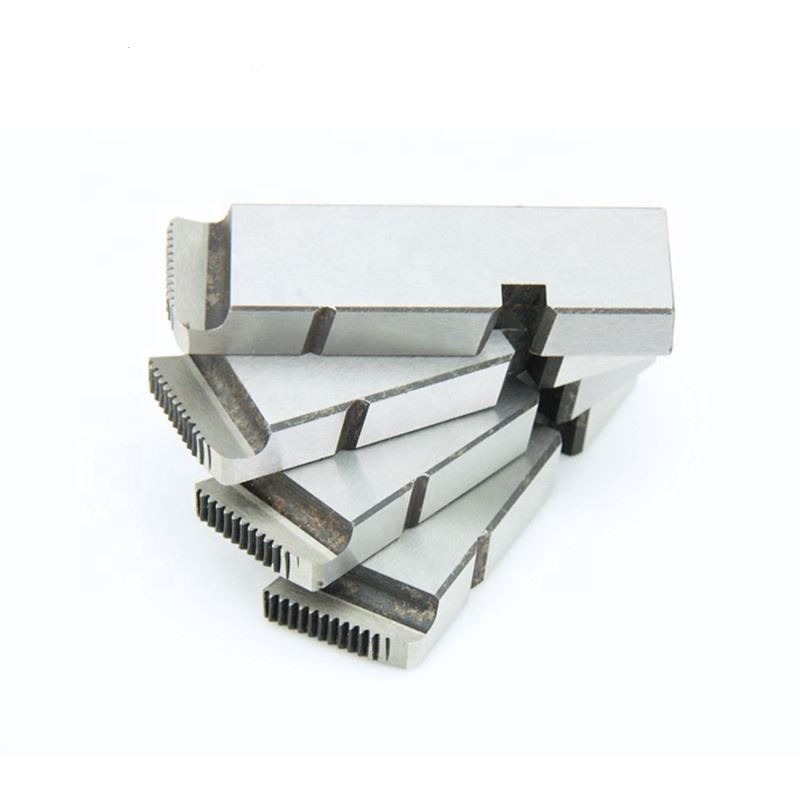
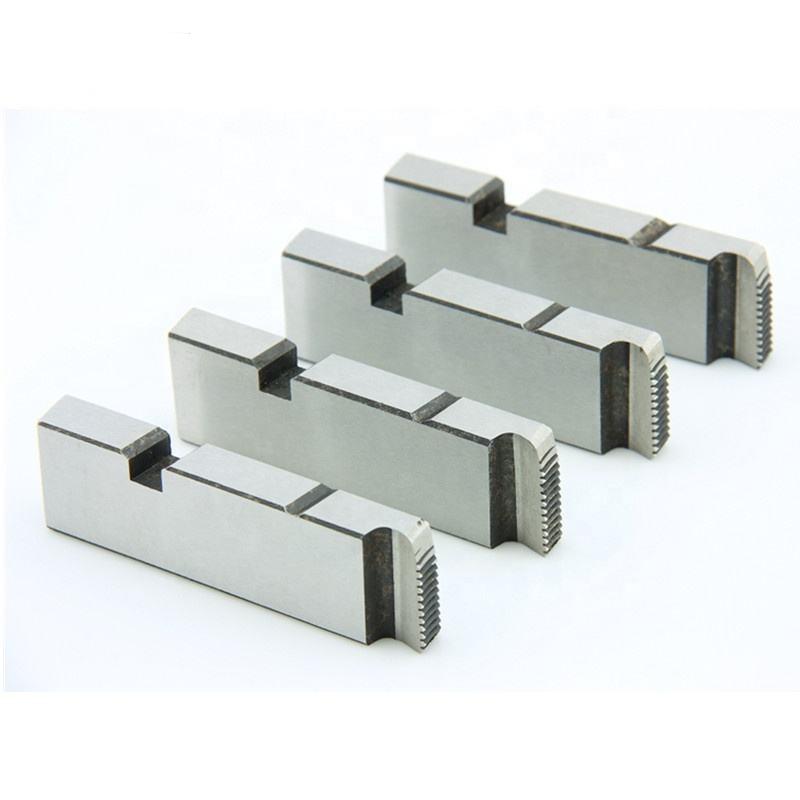
The cutting edge geometry on High Speed Steel Threading Dies directly determines both chip form and thread surface quality. Key factors include the rake angle, relief angle, and the profile of the chip removal grooves. In an electric threading machine, the rotational speed is constant and high; therefore, the die must be able to shear the material without excessive friction that leads to work hardening or torn threads.
A well-designed die uses a progressive cutting action across its chamfered lead. Rather than forcing the full thread form in a single revolution, the lead distributes the cutting load over several teeth. This reduces radial pressure on the pipe and helps maintain roundness — a common challenge when threading thin-wall or soft metal tubes.
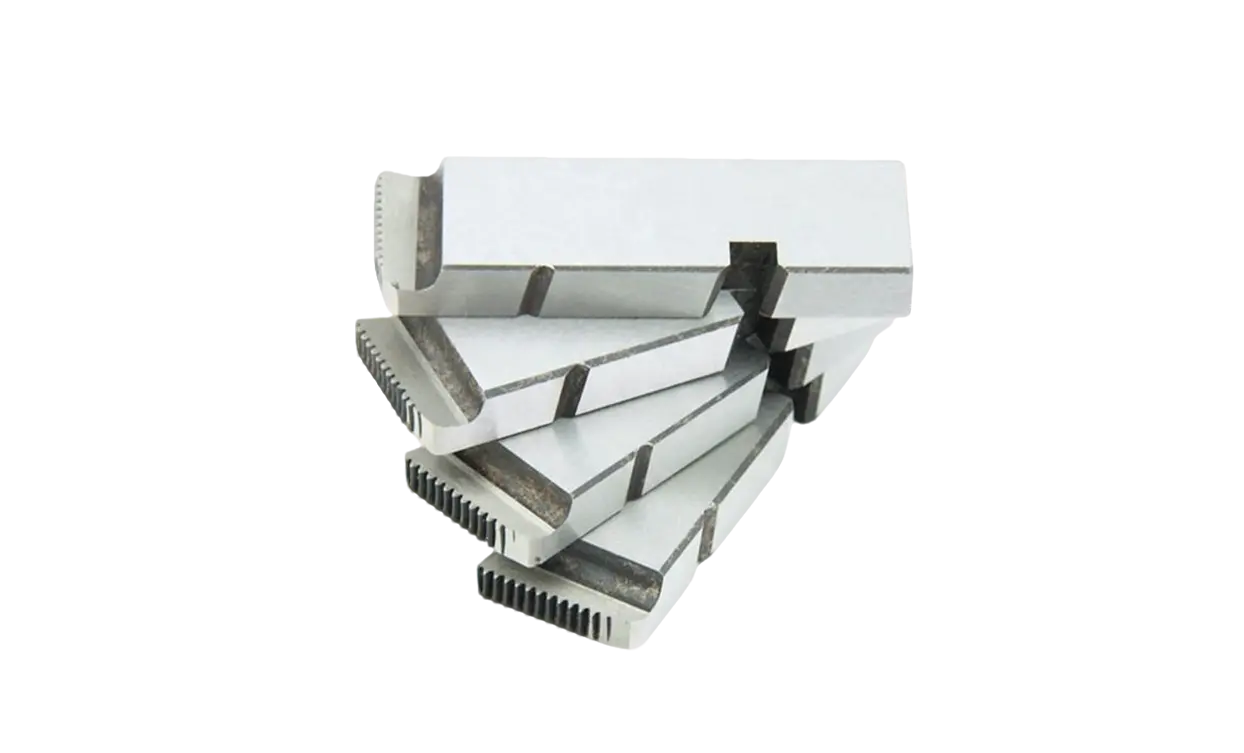
Chip evacuation becomes especially critical at diameters above 2 inches. Here, the volume of material removed is substantial. Our High Speed Steel Threading Dies feature polished, properly angled flutes that eject chips tangentially, preventing the re-cutting of swarf that would otherwise score the fresh thread flank. At Hangzhou Xinabo, each generation of die geometry is validated on our own intelligent threading machines to guarantee that chip flow never interferes with the clamping and indexing cycle.
- An aggressive but controlled hook angle reduces cutting resistance by up to 20% on mild steel pipe.
- A radial relief of 3° to 5° behind the cutting edge minimizes heel drag without compromising edge strength.
- Properly radiused chip breaker grooves prevent long, stringy chips that can wrap around the die head.
Selecting the Right Die Set Size for Common Pipe Schedules
The outside diameter of a pipe varies not only with its nominal size but also with its wall schedule. For High Speed Steel Threading Dies used on tapered pipe threads, the die must engage the pipe at the correct starting diameter to cut a thread with the proper hand-tight engagement length. A mismatch can result in threads that bottom out before sealing or, conversely, leave insufficient thread height.
In practice, a 1-inch Schedule 40 pipe has an OD of 1.315 inches, while a Schedule 80 pipe of the same nominal size has the same OD but a thicker wall. The threading die cuts onto the outer surface, so the die set for 1-inch nominal pipe must accommodate this OD tolerance. The 4-piece set configurations we provide cover the most frequently used diameters in fire protection and plumbing, with each die set sized to match the standard OD ranges per ASME B36.10.
Typical coverage of High Speed Steel Threading Dies sets for electric threading machines
| Set Configuration |
Nominal Pipe Size Range |
Application Focus |
| 1/2"–3/4" Set |
DN15–DN20 |
Sprinkler branch lines, residential plumbing |
| 1"–2" Set |
DN25–DN50 |
Standpipes, main water supply risers |
| 2.5"–4" Set |
DN65–DN100 |
Fire main headers, industrial process piping |
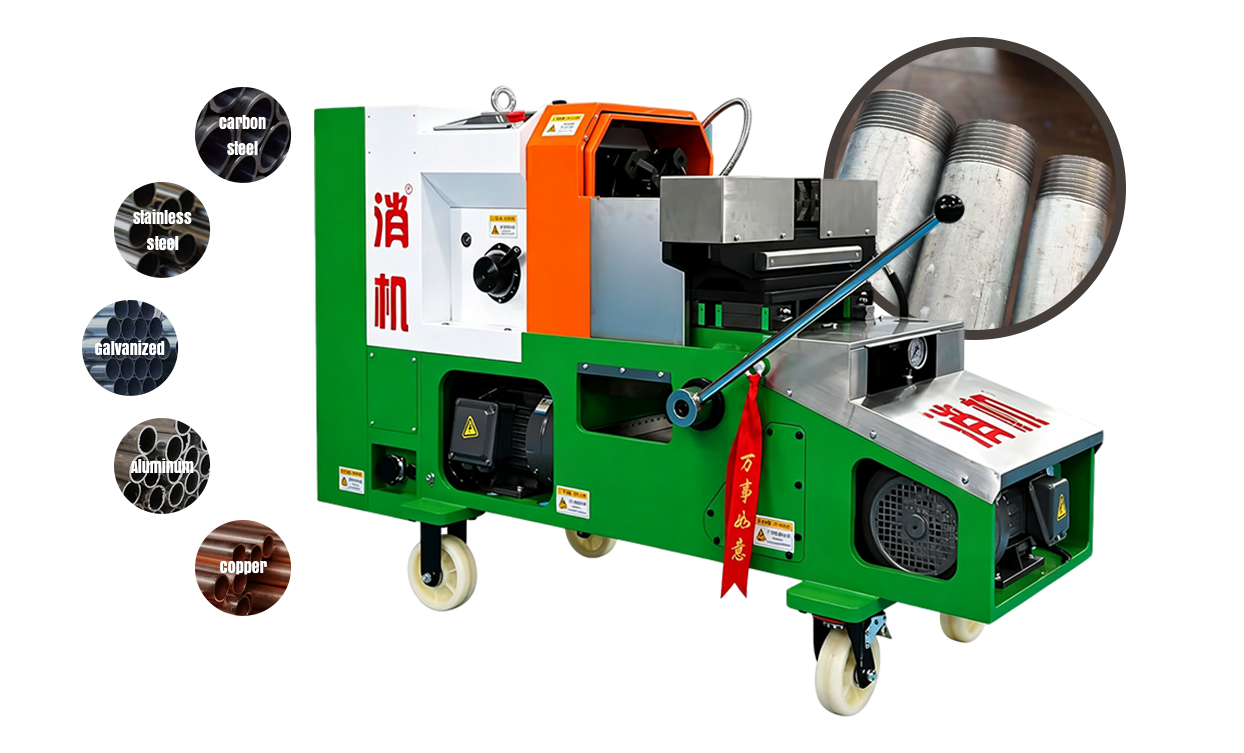
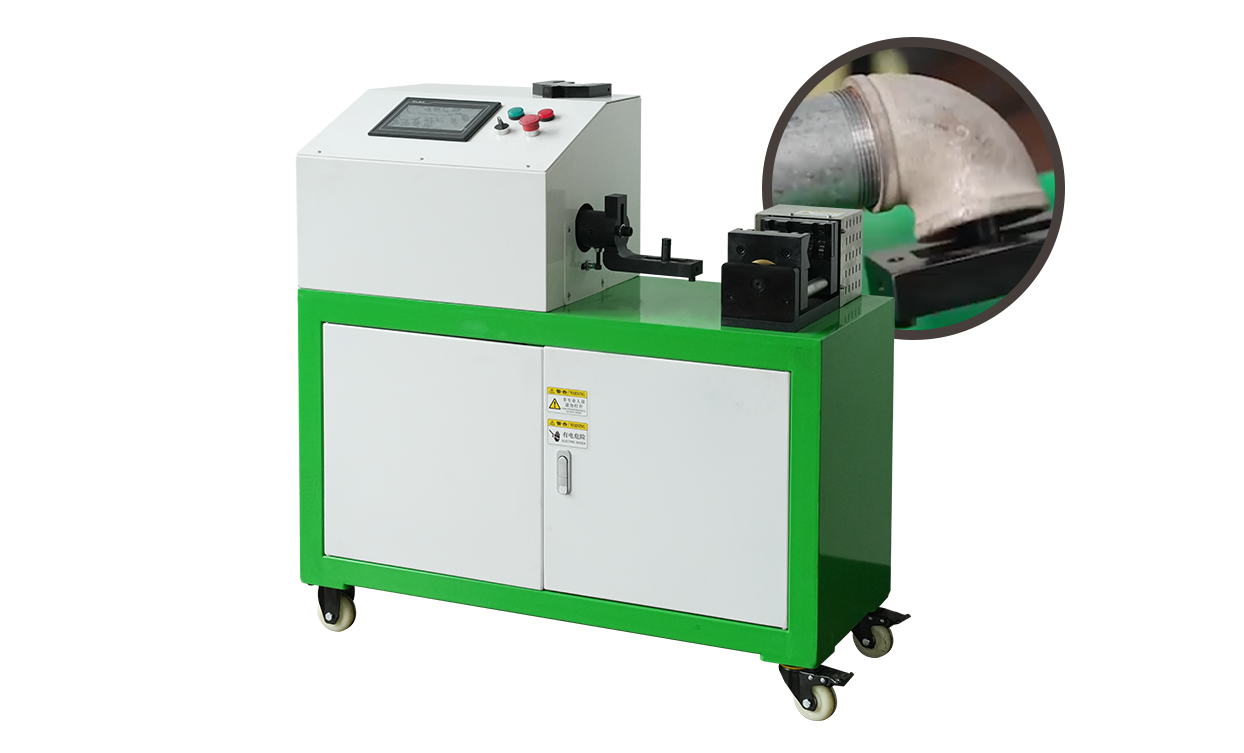
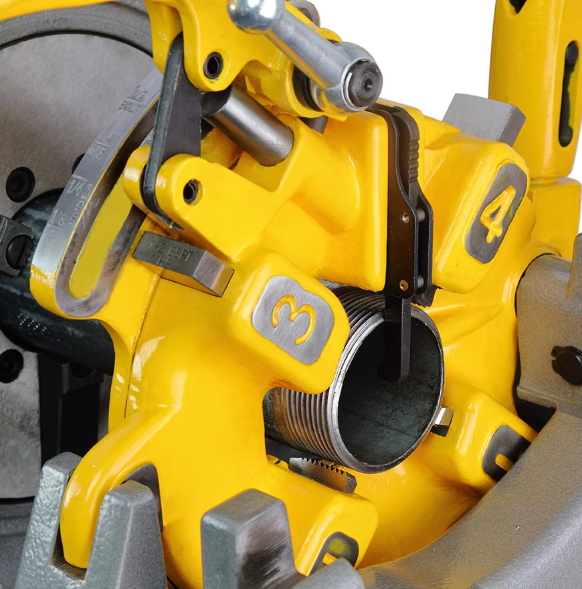
Hangzhou Xinabo has engineered these High Speed Steel Threading Dies to match the feed rate and torque output of our electric threading machines, ensuring that from the smallest to the largest diameter in the set, the die engages smoothly without imposing shock loads on the motor.
BSPT vs. NPT Thread Inspection and Field Interchange Considerations
Although both BSPT (British Standard Pipe Taper) and NPT (National Pipe Taper) are tapered threads with a 1:16 taper ratio, their thread forms are incompatible. BSPT uses a 55° included angle with rounded roots and crests, while NPT employs a 60° angle with flattened crests and roots. When High Speed Steel Threading Dies are designed to cut both standards, the die geometry must be precisely dedicated to one profile — a universal die does not exist.
Verification in the field can be performed quickly with a thread pitch gauge and a profile template. The pitch for a 1/2-inch BSPT thread is 14 threads per inch, identical to NPT, which often leads to misidentification. However, the difference becomes obvious under a profile comparator or even with a well-lit visual check of the crest shape. A reliable rule: if the crest appears distinctly rounded and the markings on the fitting indicate "Rp" or "Rc", the die must be a BSPT configuration.
Sealant application also differs. NPT threads routinely require PTFE tape or liquid sealant applied to the male thread, while BSPT systems, particularly those following ISO 7-1, may rely more on the metal-to-metal interference of the taper joint, using a jointing compound sparingly. Using a NPT-marked High Speed Steel Threading Die on a BSPT job will compromise the seal even with heavy sealant, because the thread flank contact area is reduced by the angle mismatch.
Our High Speed Steel Threading Dies are available in dedicated BSPT and NPT variants, and Hangzhou Xinabo ensures that each set is laser-marked with the thread standard to eliminate guesswork on mixed-standard construction sites.
Maximizing HSS Die Service Life Through Monitoring Cutting Edge Condition
High Speed Steel Threading Dies can withstand hundreds of threading cycles before requiring re-sharpening, but their longevity depends heavily on recognizing the early signs of edge degradation. The most practical field indicator is the increase in motor current draw on the electric threading machine. A rise of 10% to 15% above the baseline current for a given pipe size suggests that the cutting edges are rounding and friction is increasing.
Visual inspection under magnification reveals three stages of wear:
- Initial flank wear: a fine, uniform wear land up to 0.1 mm is normal and does not affect thread accuracy.
- Crater formation: localized pits on the rake face indicate that the HSS is being thermally softened at the point of contact; lubrication should be checked immediately.
- Edge chipping: micro-chipping along the crest-forming edge creates rough thread peaks and is a definitive signal that re-grinding is overdue.
When re-sharpening is performed, it is critical to remove an equal amount of material from each cutting tooth to preserve the die's concentricity. Even a 0.02 mm asymmetry can cause the thread to be cut out-of-round. At Hangzhou Xinabo, our High Speed Steel Threading Dies are precision-ground from a solid HSS blank with balanced tooth spacing, so that after professional re-grinding they maintain the original form tolerance and continue to produce tight, reliable pipe joints.

 English
 Español
 عربى
عربى