Matching Compressor Duty Cycle to Intermittent Demand Patterns
In workshop and repair environments, compressed air demand often arrives in short, intense bursts, followed by extended idle periods. A compressor’s duty cycle—the percentage of time it can safely operate within a given period—determines whether it can handle these patterns without overheating or premature wear. For typical reciprocating and scroll machines, the recommended duty cycle is 60–70%, meaning the pump must rest for 30–40% of each hour. Exceeding this limit shortens motor life and increases maintenance frequency.
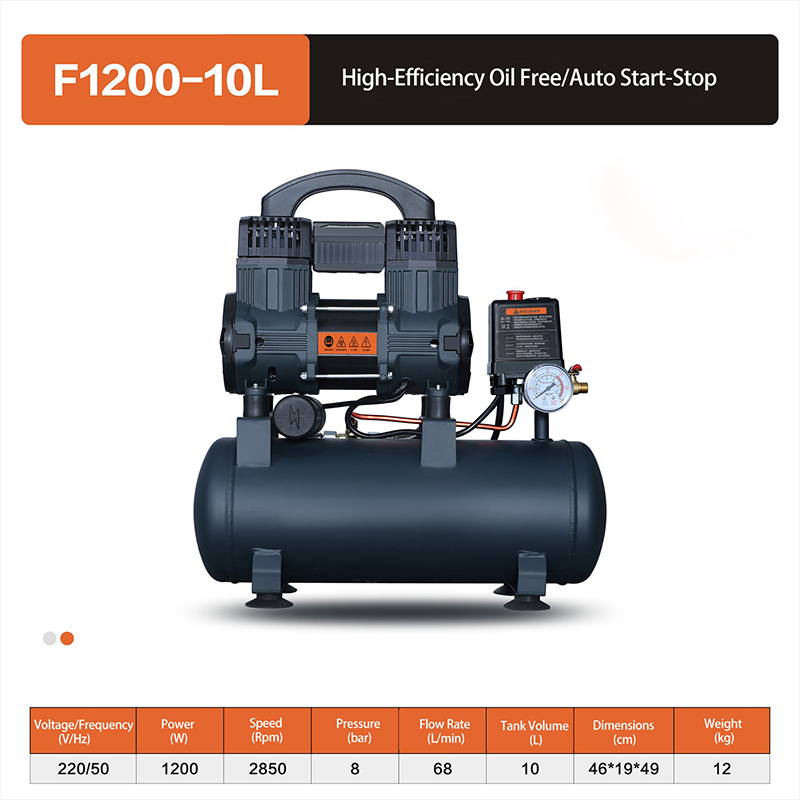
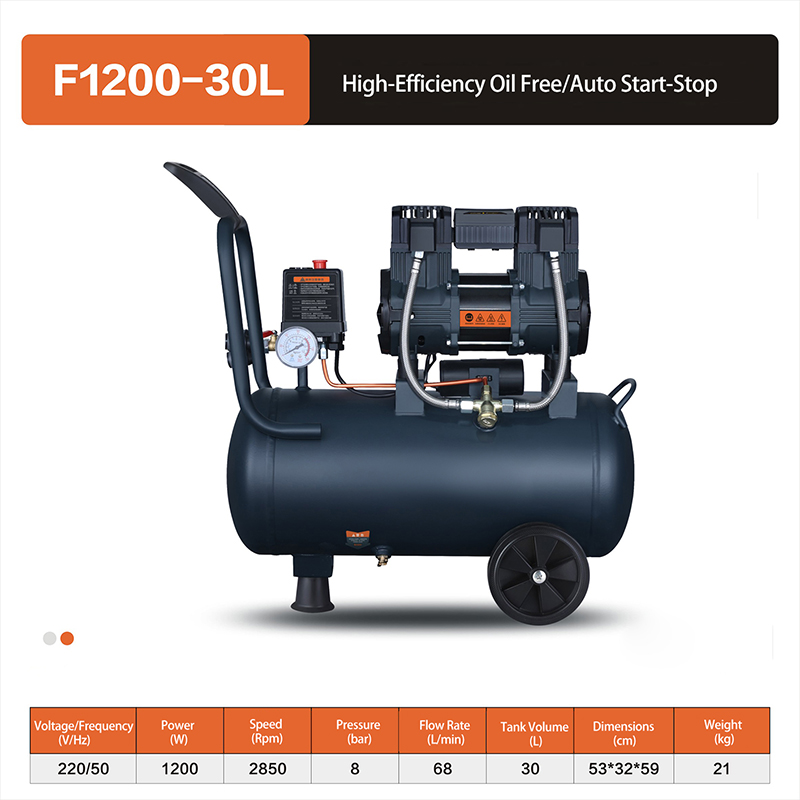
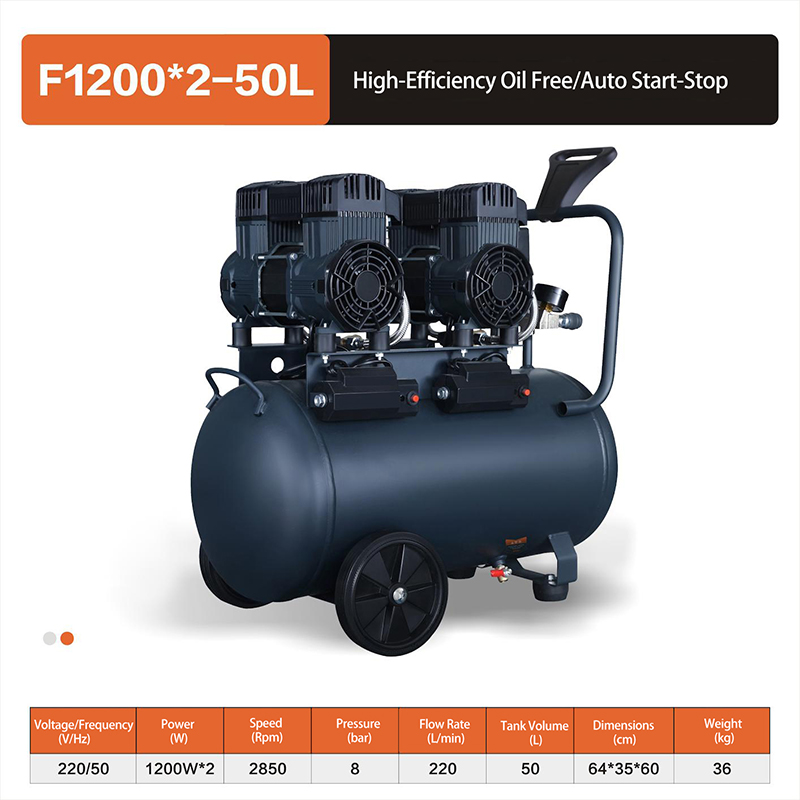
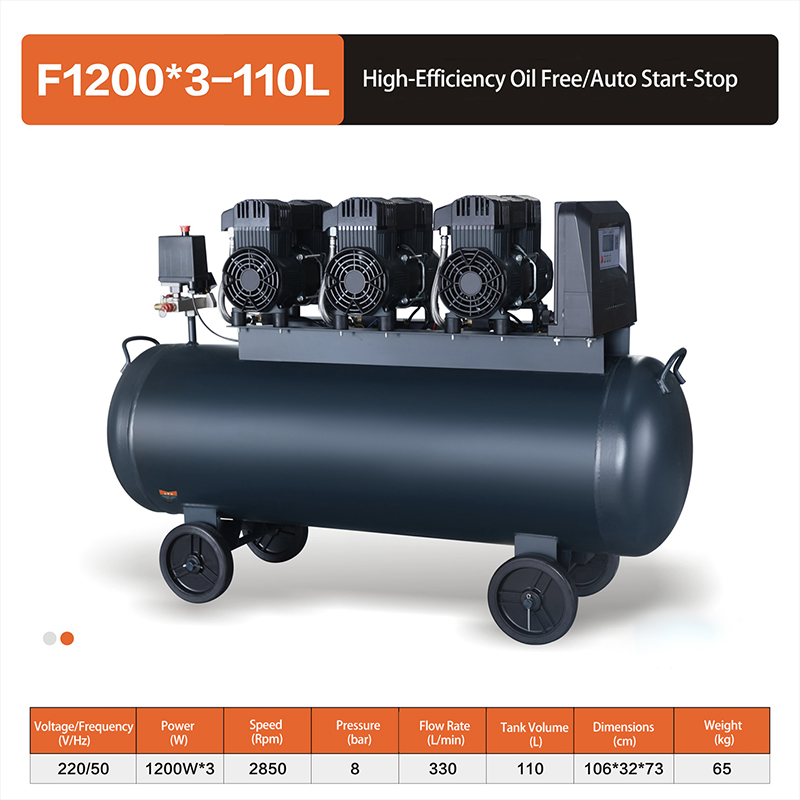
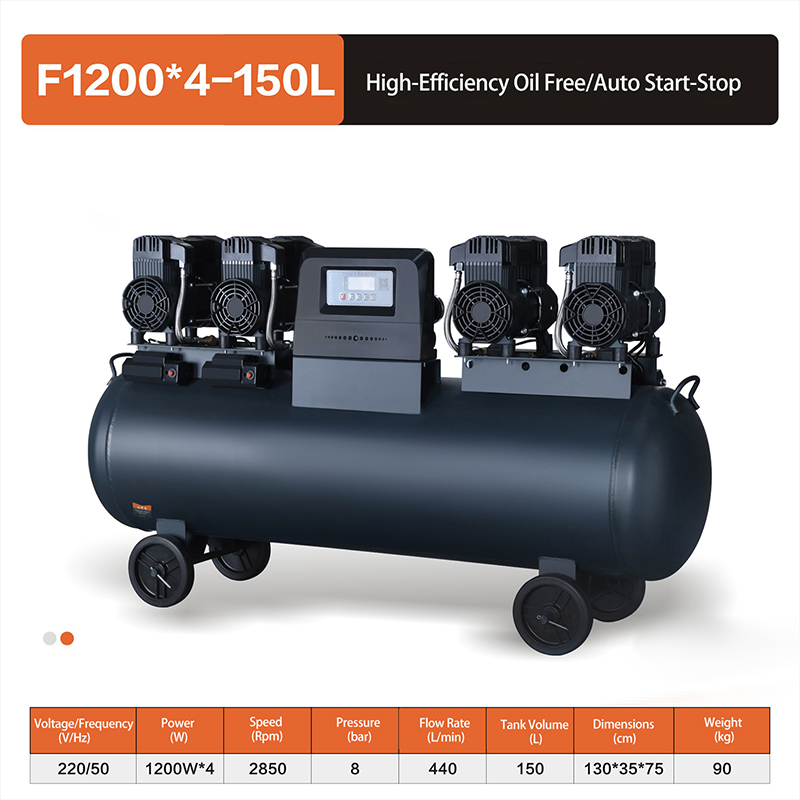
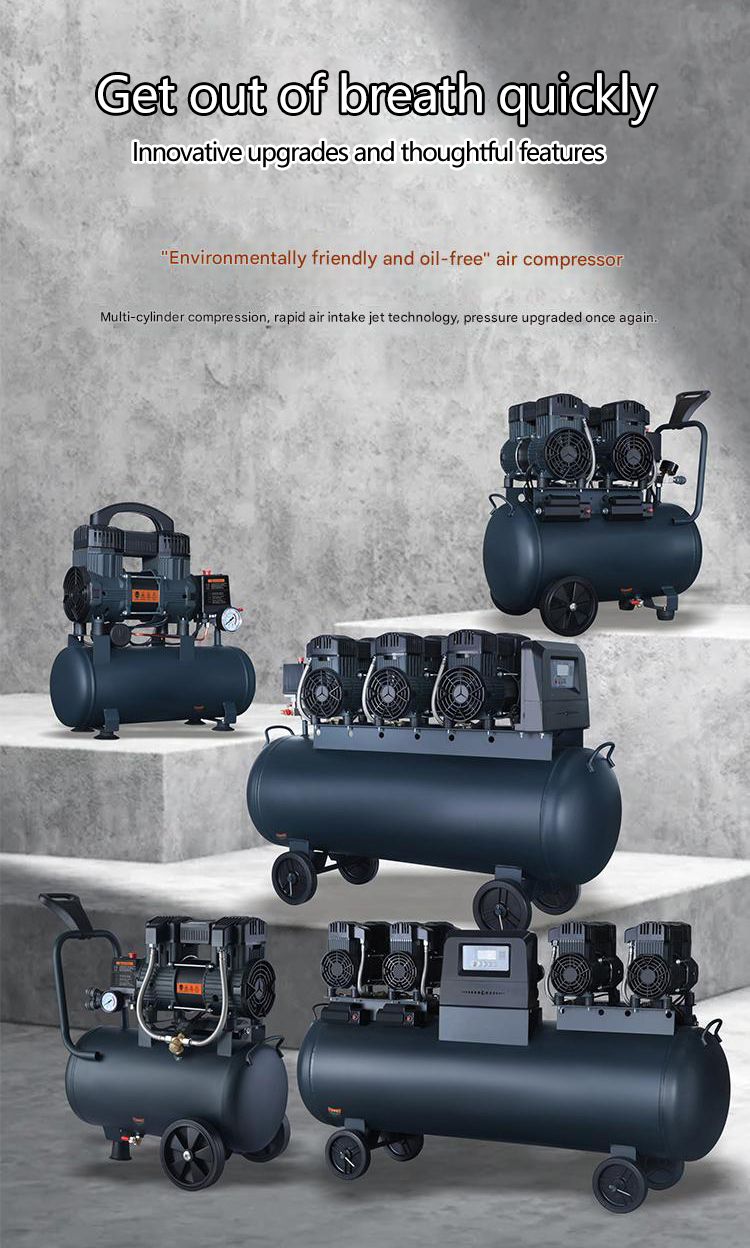
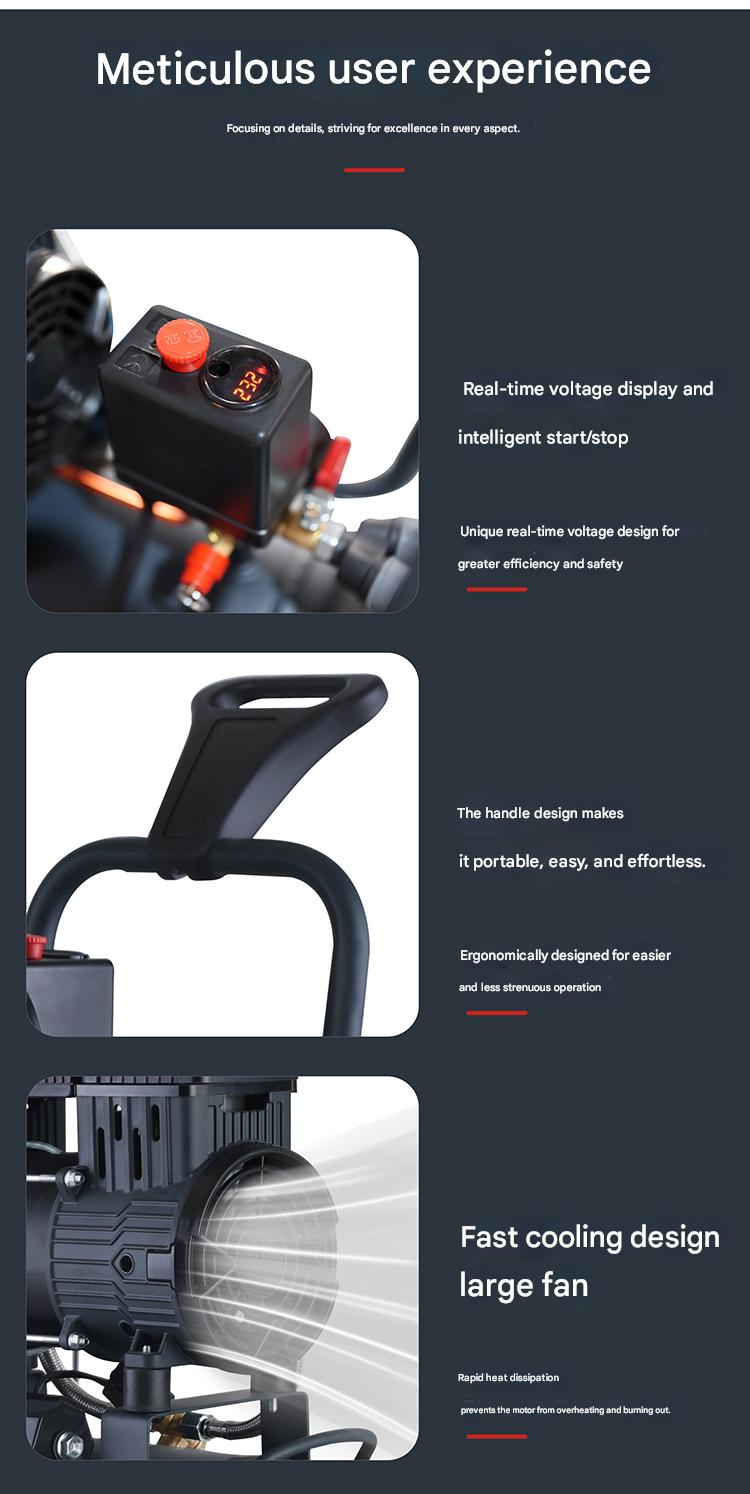
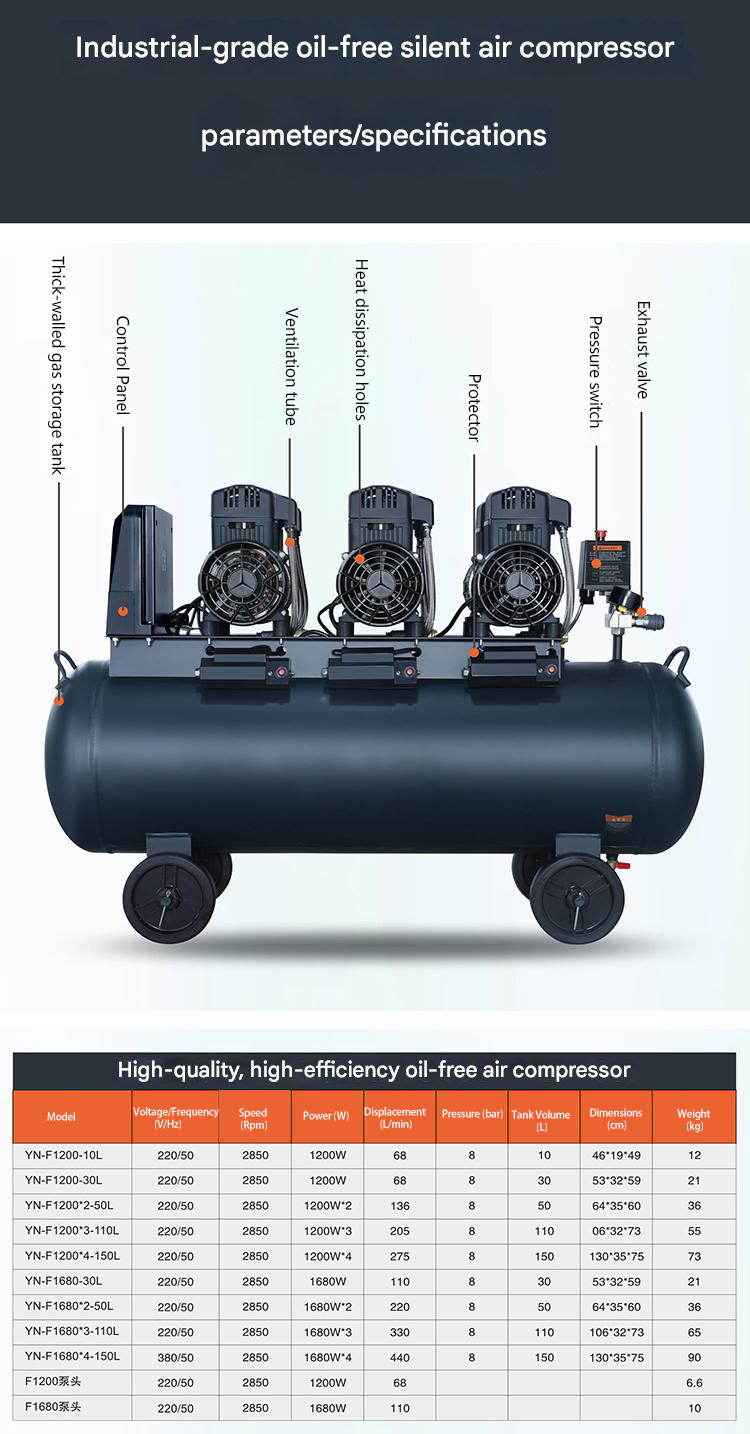
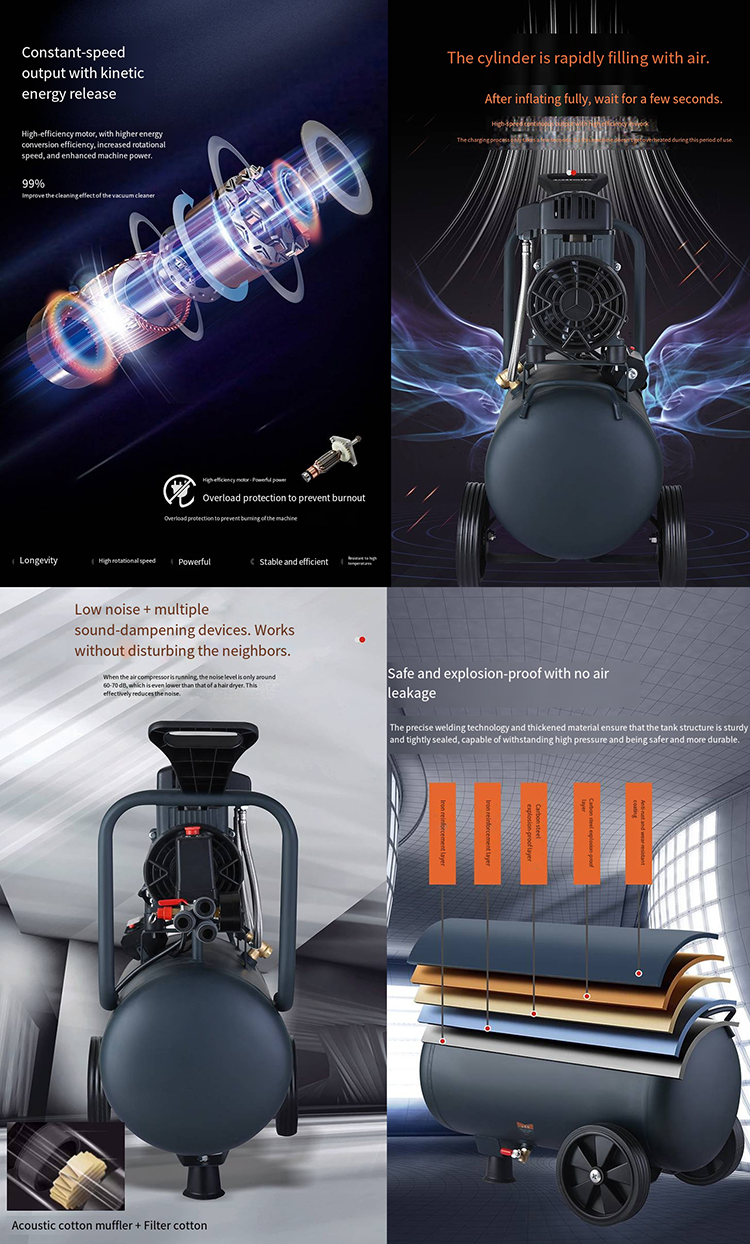
At Hangzhou Xinabo Intelligent Electromechanical Technology Co., Ltd, we designed the F1200 Series Air Compressor with an intelligent auto start‑stop system that naturally aligns with intermittent duty. Instead of idling between demand peaks, the compressor shuts down completely when the receiver tank reaches the upper pressure setpoint, then restarts only when pressure drops to the lower threshold. This behavior reduces the effective duty cycle and can cut energy consumption by up to 30% compared to constant‑run compressors that waste power during unloaded idle.
- Factors that influence duty cycle suitability include tank volume, pressure bandwidth, and the peak air flow of connected tools.
- A narrow pressure band (e.g., 1–1.5 bar) causes more frequent starts, while a wider band extends off‑time but requires tools tolerant of pressure variation.
- Matching the compressor’s free air delivery (FAD) to the actual continuous demand, rather than peak intermittent flow, prevents rapid cycling and excessive starts per hour.
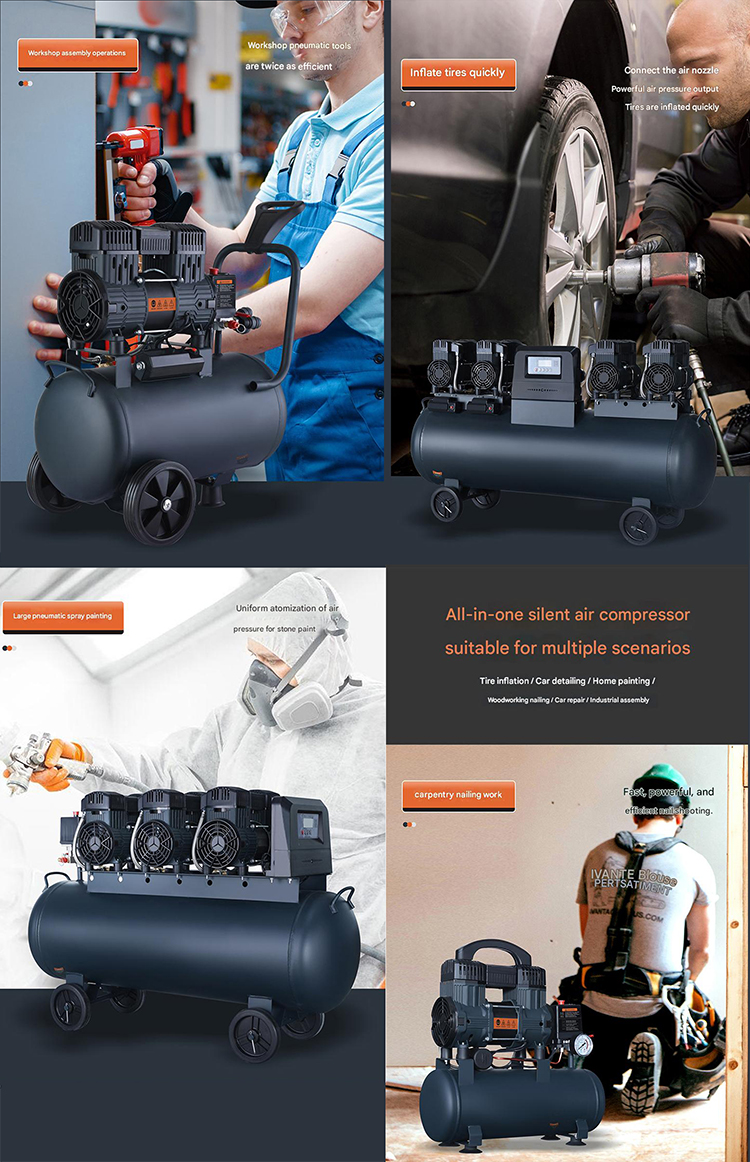
For users running impact wrenches, ratchets, or blow guns in bursts, the F1200 Series Air Compressor maintains standby readiness without accumulating unnecessary motor heat, preserving both performance and service life over thousands of cycles.
Oil-Free Air: Preventing Hidden Contamination in Sensitive Processes
Oil‑free compressed air is often simplified to “no oil droplets,” but the more insidious threat is vapor‑phase hydrocarbon carryover that standard coalescing filters cannot fully remove. In oil‑lubricated compressors, hot compression vaporizes trace lubricant, which travels downstream and condenses inside dental handpieces, laboratory analyzers, or food‑contact surfaces. Even minute residues can alter test results, compromise sterility, or create rejection in light manufacturing.
The F1200 Series Air Compressor eliminates this risk at the source. Its oil‑free air end operates without any lubricant in the compression chamber, achieving ISO 8573‑1 Class 0 output—the strictest purity classification. We ensure every F1200 Series Air Compressor delivers truly oil‑free air, safeguarding expensive dental turbines, spectrometer optics, and sensitive pneumatic controls from microscopic contamination. Additionally, oil‑free operation removes the burden of condensate treatment: there is no oily condensate to collect, dispose of, or process, simplifying compliance with environmental regulations.
- Dental clinics – prevents oil film build‑up in high‑speed handpieces and air‑water syringes.
- Laboratories – protects gas chromatography and mass spectrometry inlets from hydrocarbon interference.
- Electronics assembly – avoids contact contamination during PCB drying and component cleaning.
- Pharmaceutical packaging – meets clean‑room air quality without downstream adsorptive filters.
Calculating Total Cost of Ownership: Specific Power and Idle Losses
Beyond purchase price, the dominant cost driver in a compressor’s lifetime is energy. Two metrics reveal the real efficiency: specific power (kW per m³/min) and idle power draw. A machine with low specific power consumes less electricity to produce a given volume of air, while zero idle losses prevent energy being wasted when no air is demanded. The F1200 Series Air Compressor combines an efficient air end with auto stop‑start to deliver compelling lifecycle savings.
| Parameter |
Conventional Oil‑Lubricated Compressor |
F1200 Series Air Compressor |
| Rated motor power |
10 kW |
7.5 kW |
| Specific power (FAD 1.0 m³/min) |
~9.5 kW/(m³/min) |
8.0 kW/(m³/min) |
| Idle power consumption |
2.5 kW (unloaded running) |
0 kW (auto stop) |
| Annual energy use (2,000 h, 60% demand) |
15,500 kWh |
9,000 kWh |
| Estimated annual electricity cost ($0.12/kWh) |
$1,860 |
$1,080 |
Comparison of typical energy consumption for intermittent air demand – conventional vs. oil‑free auto stop‑start compressor
Our F1200 Series Air Compressor, with its specific power of 8.0 kW/(m³/min) and zero idle drain, directly eliminates the unloaded running hours that inflate bills. In the scenario above, the annual savings reach $780, meaning the unit can pay back its price premium within 2–3 years through energy alone. For operations seeking precise pressure control and maximum savings, a Custom F1200 Series Air Compressor can be pre‑set to your exact cut‑in/cut‑out thresholds, further optimizing performance.
Sizing Air Receiver Tanks to Maximize Auto Start‑Stop Efficiency
An auto start‑stop compressor relies on the air receiver tank to absorb demand fluctuations and limit motor starts. A tank that is too small causes short cycling—rapid on‑off transitions that increase inrush current, heat motor windings, and accelerate contactor wear. An oversized tank increases footprint and initial cost but can extend cycle intervals significantly. The goal is to balance these factors for the expected demand profile.
A practical sizing guideline uses the formula: V = (Q × t) / (ΔP × 60), where V is tank volume in liters, Q is average air demand in L/s, t is the desired minimum off‑time in seconds, and ΔP is the pressure differential (bar) between cut‑out and cut‑in. For a typical 1⁄2″ impact wrench consuming an average of 8 L/s with a 1.5 bar differential and a desired 3‑minute idle, the recommended tank volume is around 250–300 L. This sizing ensures the F1200 Series Air Compressor starts no more than 6–8 times per hour under intermittent load, well within safe limits for the motor and starter.
- Wider pressure bands (e.g., 2 bar) reduce cycle frequency but may require downstream regulators if tools are pressure‑sensitive.
- In multi‑user workshops, sum the average concurrent air consumption, not the peak flow of every tool.
- A vertical receiver saves floor space and promotes better condensate drainage in oil‑free systems.
If your air demand profile includes sudden, short‑duration spikes that cause rapid pressure drops, our Custom F1200 Series Air Compressor can be supplied with a tailored pressure switch setting and matched to a larger tank, avoiding nuisance starts and extending component life.

 English
 Español
 عربى
عربى