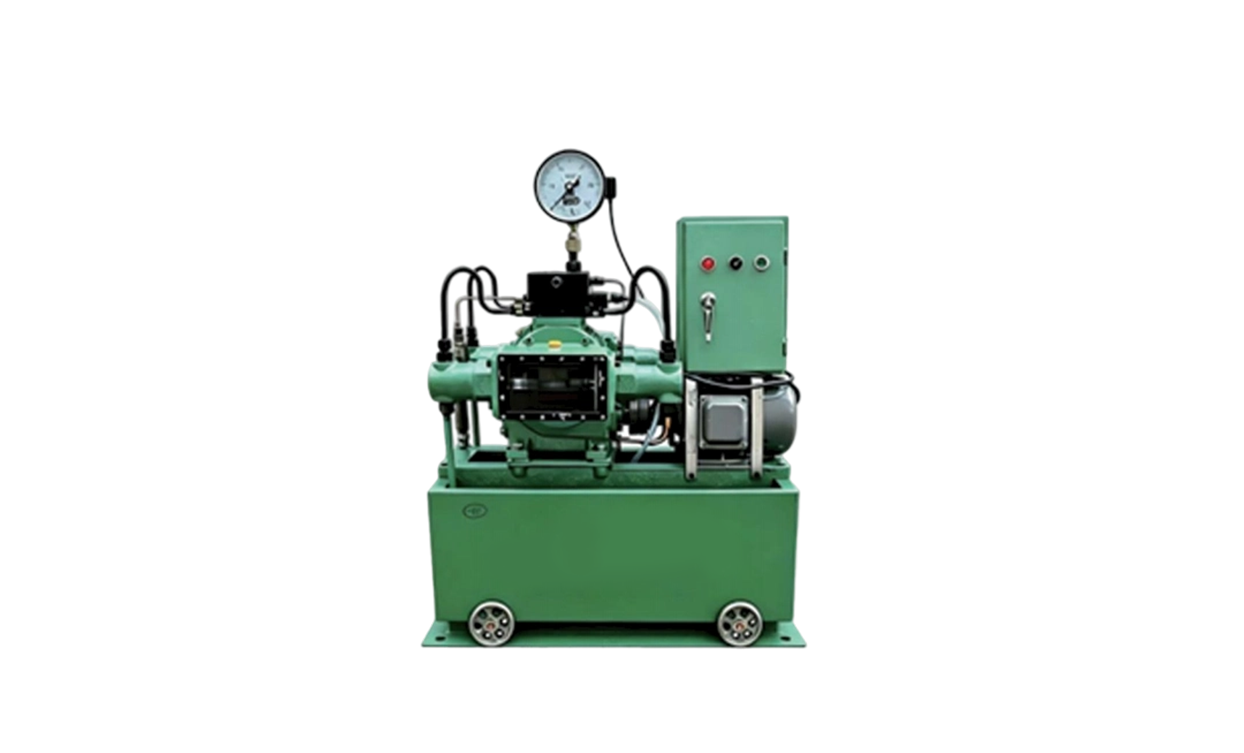
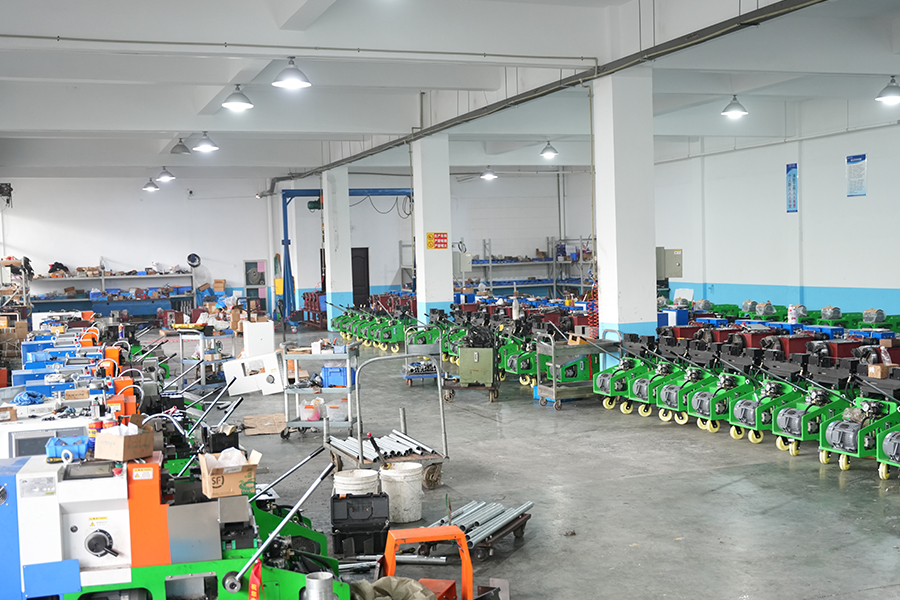
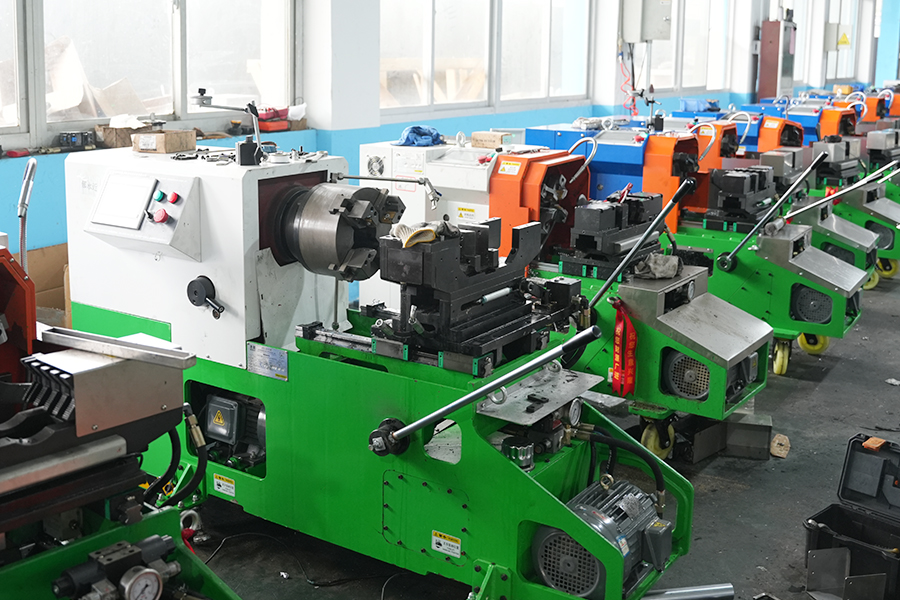
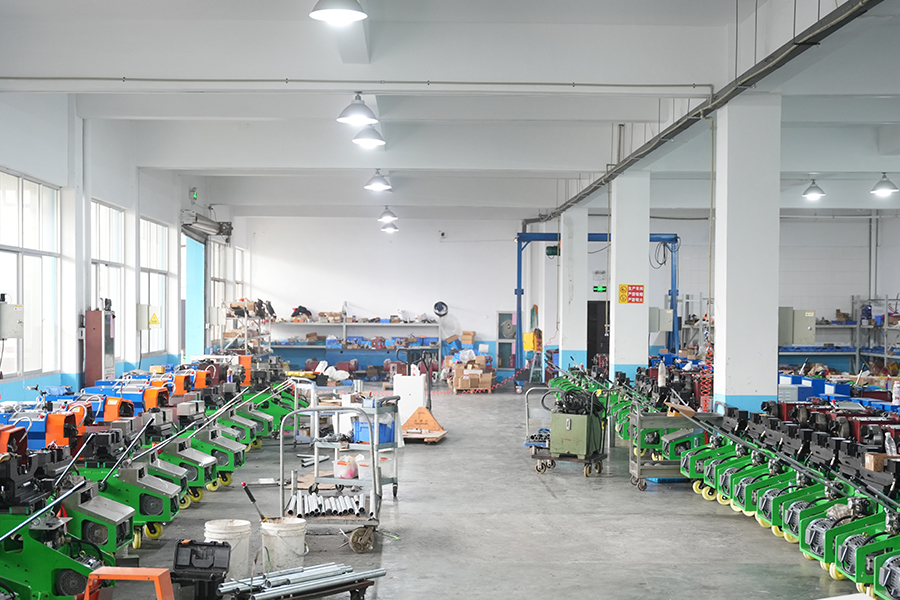
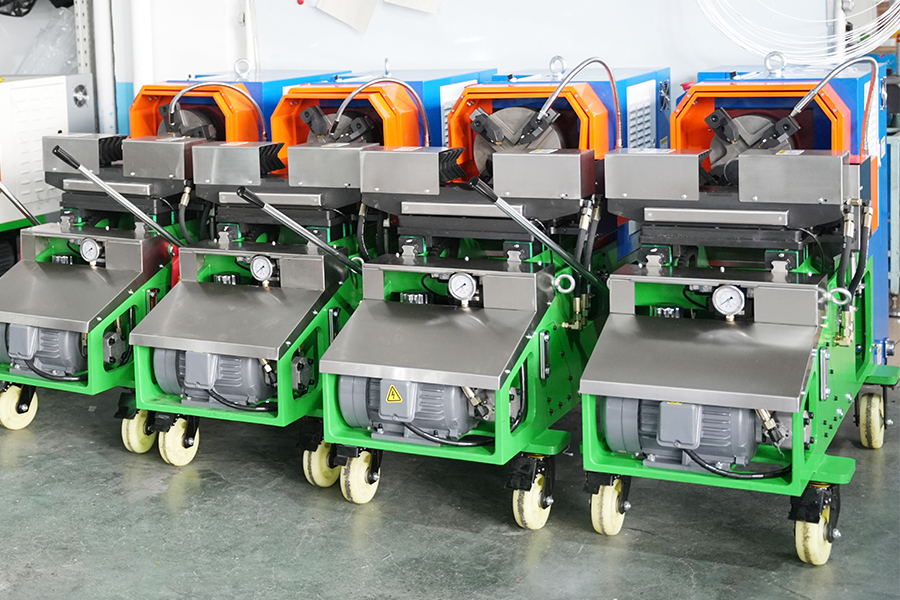
Hangzhou Xinabo Intelligent Electromechanical Technology Co., Ltd manufactures Electric Pressure Test Pump manufacturer units for hydrostatic testing and leak detection on newly installed and repaired piping systems. They complete the connection workflow we build equipment for: after pipe cutting, thread processing and joint tightening, the line is filled and held under pressure to prove joint integrity before handover. Our 380V hydrostatic unit delivers adjustable output up to 6 MPa with automatic pressure-hold and relief, and each pump is configured around the required test pressure, test medium, connection size and the power supply available on site.
Where Our Pressure Test Pumps Fit in the Connection Workflow
As a Engineering Construction Pipeline Connection Solutions manufacturer, we match product configuration to the application, operating limits, interfaces and acceptance criteria defined for each project.
Pressure testing is the acceptance step that converts a finished pipe installation into a verified system. Our electric test pumps are used on water supply pipes, fire sprinkler mains, heating and HVAC circuits, and industrial process lines, and on the valves, fittings and pressure vessels connected to them.
- Fire protection: sprinkler mains, risers and hydrant pipework held at the specified test pressure before commissioning.
- Building services: domestic water, heating and chilled-water circuits where threaded and mechanical joints must be proven leak-free.
- Industrial piping: chemical, petrochemical and utility lines where test pressure and hold time are defined by the project specification.
- Maintenance and repair: re-testing after joint replacement, valve change-out or section isolation.
The Xinabo Electric Pressure Test Pump Range
Our current hydrostatic test pump is built on a three-phase 380V industrial motor driving a high-pressure plunger pump, with a high-precision pressure gauge and an automatic pressure relief protection system that stops and holds pressure once the set value is reached. The mobile wheeled chassis lets one operator move the unit between floors, risers and test stations without lifting equipment.
The same platform is used across plumbing, fire protection and chemical pipeline construction. Where a project needs a different pressure ceiling, a different connection interface or a different control arrangement, we confirm the requirement at configuration stage rather than forcing the standard build onto the application.
Configuration Matrix: What We Confirm Before Build
| Configuration item |
What we set |
Effect on the test |
| Working pressure |
Adjustable set point within the pump rating; 0–6 MPa on the 380V hydrostatic unit |
Must exceed the system design pressure by the margin the project specification requires |
| Power supply |
Three-phase 380V industrial motor; site voltage and phase confirmed before order |
Determines cable sizing, protection and whether a site transformer is needed |
| Pump end |
High-pressure plunger pump matched to the pressure and flow needed to fill the section |
Controls fill time on long mains and stability during the hold period |
| Instrumentation |
High-precision pressure gauge with a range suited to the set point |
Keeps the working reading in the readable part of the dial for accurate records |
| Pressure control |
Automatic stop-and-hold at the set value with pressure relief protection |
Prevents over-pressure damage to the pipework and to the pump itself |
| Connection interface |
Outlet size, hose, manifold and adapters matched to the test point |
Reduces leak paths at the pump connection and speeds up station changes |
| Mobility and layout |
Wheeled chassis, hose length and control position for the site route |
One operator can reposition the unit between risers and floors |
| Test medium |
Clean water or inhibited water, with filtration at the inlet where required |
Protects plunger seals and avoids corrosion or contamination inside the tested line |
Materials, Test Media and System Compatibility
The pipe families we build pipeline equipment for — carbon steel, galvanized steel, stainless steel, aluminum and copper — behave differently under hydrostatic load. Threaded carbon and galvanized joints are normally tested with clean water; stainless and copper systems are better served by inhibited or low-chloride water, and the medium is agreed before the pump is configured.
Air or gas testing is a different risk category and is not the standard duty of a hydrostatic pump. Where a specification calls for pneumatic proof testing, the pressure source, isolation and exclusion zone are handled as a separate engineering decision.
Pressure Control, Instrumentation and Site Integration
The control logic is deliberately simple for site use: the operator sets the target pressure, the pump raises the line to that value, then stops and holds automatically. The relief protection prevents the set value from being exceeded if the line is closed off or a valve is shut during the hold period.
- Set point and hold duration are taken from the project test procedure, not from the pump.
- Gauge range is selected so the working pressure sits in the mid-scale band for readable records.
- Fill rate is matched to section volume so long mains are not filled faster than the vents can clear air.
- Where the test station is remote from the power point, cable route and protection are confirmed with the site team.
Quality Control and Conformity Evidence
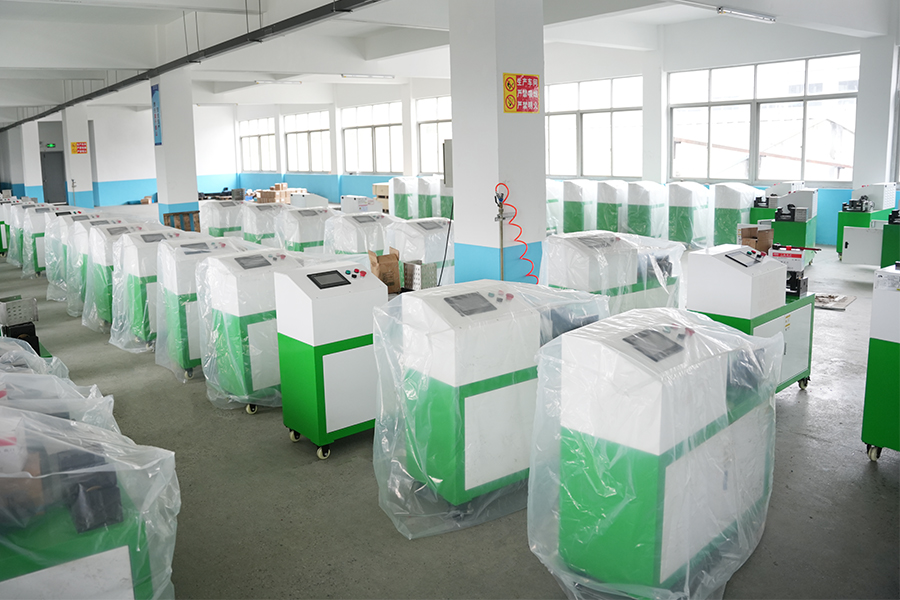
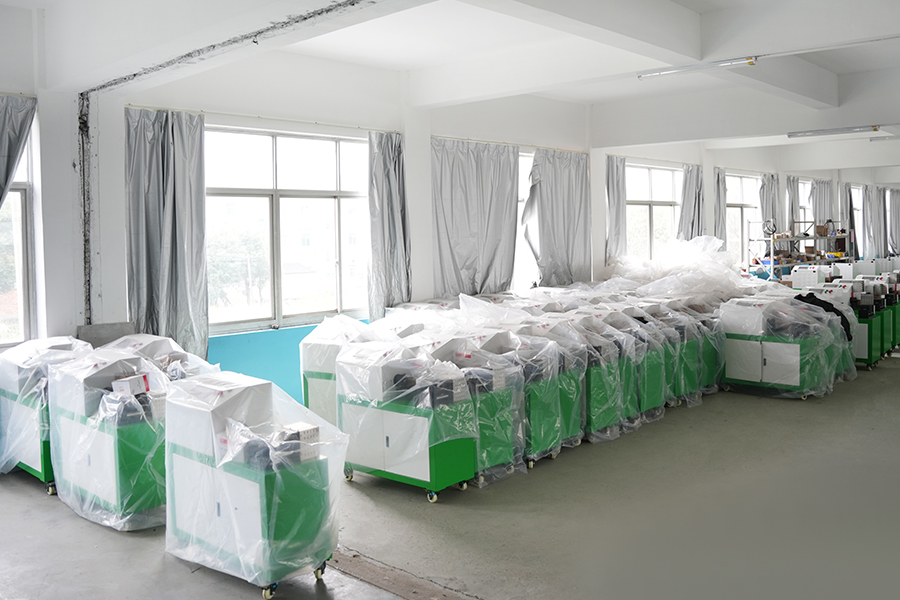
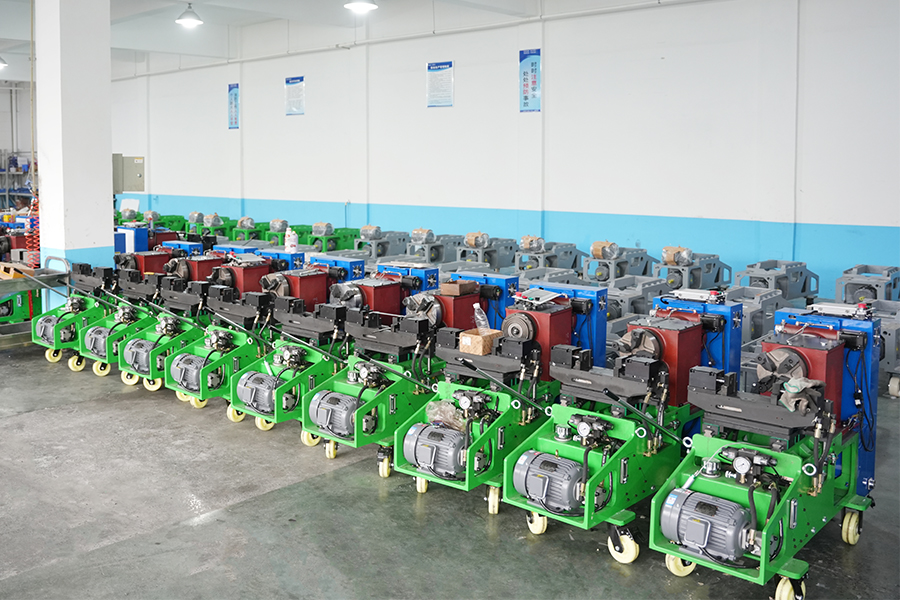
Xinabo has been building pipeline machinery since 2010 and holds the National High-tech Enterprise title, with more than 30 patents covering threading, clamping and pipe connection equipment. Our pressure test pumps are assembled and function-checked in our own workshop before packing, and our conformity documentation includes attestation of conformity referencing the Machinery Directive and the Electromagnetic Compatibility Directive.
Because the pump is one link in a chain, we supply it alongside the rest of our Pipe Fabrication & Installation Equipment range, so cutting, threading, tightening and testing are specified against the same pipe schedule and site conditions.
Installation, Utilities and Operator Safety
Commissioning is straightforward when the site conditions are known in advance. The unit needs a stable 380V three-phase supply with correct earthing and residual-current protection, a clean water source, and a drain or collection point for release water.
- Purge air from the section before pressurising; trapped air makes the gauge reading unstable.
- Keep personnel clear of the test section and never work on a joint under pressure.
- Isolate the pump before opening any connection, and release pressure through the relief path.
- Drain the pump and hose after use, and store frost-free to protect the plunger and seals.
Maintenance, Spare Parts and Serviceability
Wear parts are concentrated in the pump end: plunger seals, inlet and discharge valves, and the pressure gauge. Water quality and inlet filtration have more influence on seal life than running hours, so we recommend filtered water and a routine drain-down after each test campaign.
We hold a spare parts range for our pipeline equipment and provide operator and maintenance training for buyer teams, covering correct set-up, hold procedure, seal replacement and gauge verification. Our Intelligent Threading Machine and Variable Frequency Cold Saw are supported through the same parts and service channel.
Information We Use to Configure Your Solution
A quotation that matches the job starts from the test itself. The following inputs let us confirm the pump build, the connection kit and the documentation package without a round of clarification later.
- Test pressure, hold duration and the standard or project procedure being followed.
- Pipe material, nominal size range and total volume of the section to be filled.
- Test medium and any restriction on water quality or additives.
- Site power: voltage, phase, available current and distance to the test station.
- Connection point size and type, plus hose length needed to reach it.
- Number of test stations per shift and how the unit will be moved between them.
- Ambient conditions, including whether the pump will be stored in freezing temperatures.
- Documentation, labelling, packaging and delivery scope required for the project.
Frequently Asked Questions
What pressure range does your electric pressure test pump cover?
Our 380V electric hydrostatic pressure test pump is adjustable from 0 to 6 MPa and holds the set pressure automatically. The gauge range is selected to suit the working pressure of your test so the reading stays accurate and easy to record.
Can it be used on fire sprinkler and domestic water systems?
Yes. Fire protection pipework, water supply lines, heating circuits and industrial process piping are the main applications. The pump is used after threading and joint tightening to confirm the installed line holds pressure before handover.
What happens if the set pressure is reached during the hold?
The automatic pressure relief protection system stops the pump and holds the line at the set value, preventing over-pressure damage to the pipework, valves and vessels under test. The operator releases pressure through the relief path after the hold period.
What power supply does the pump need on site?
The standard unit runs on a three-phase 380V industrial motor. We confirm the site voltage, phase and available current before the order is released, and we agree the cable route and protection with the site team where the test station is remote from the power point.
How is the pump moved between test stations?
The unit is built on a mobile wheeled chassis so one operator can move it between floors, risers and test points. Hose length and outlet configuration are matched to the layout of your site during configuration.
Which spare parts should be kept on site?
Plunger seals, inlet and discharge valves and a replacement pressure gauge cover normal wear. We supply these from our spare parts range and include seal replacement and gauge verification in the operator training we provide for buyer teams.

 English
 Español
 عربى