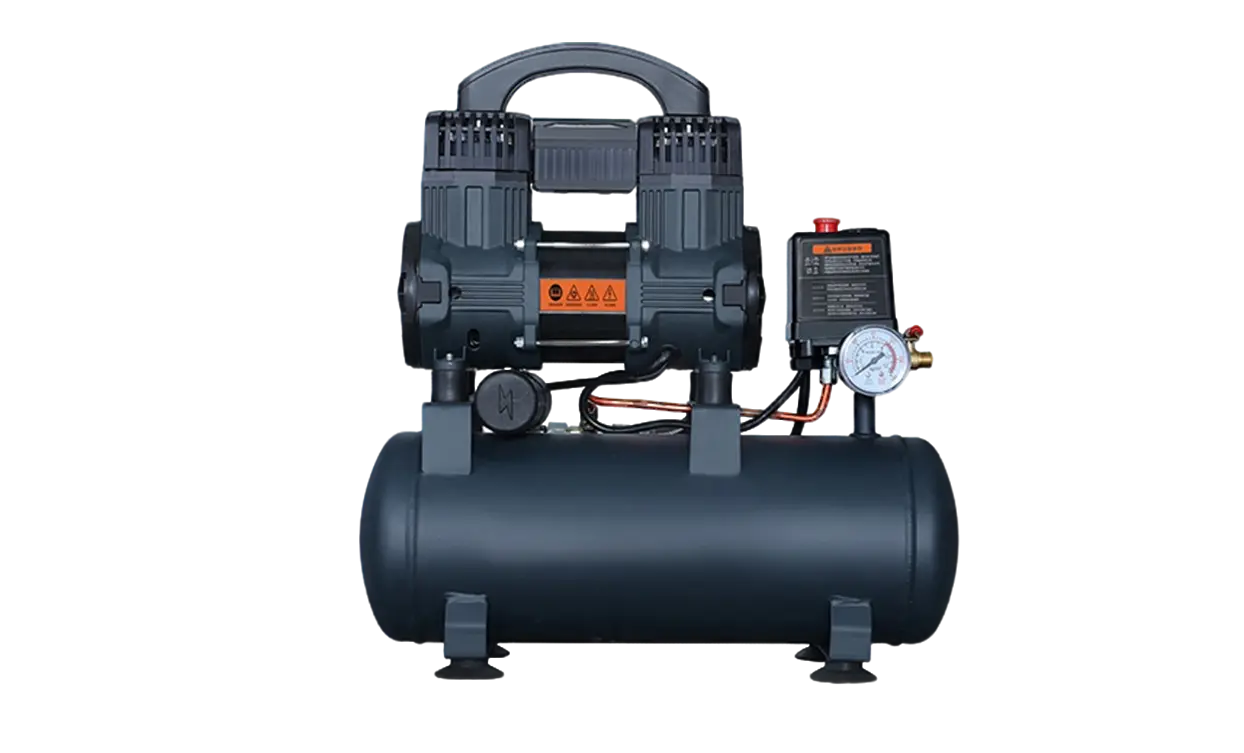
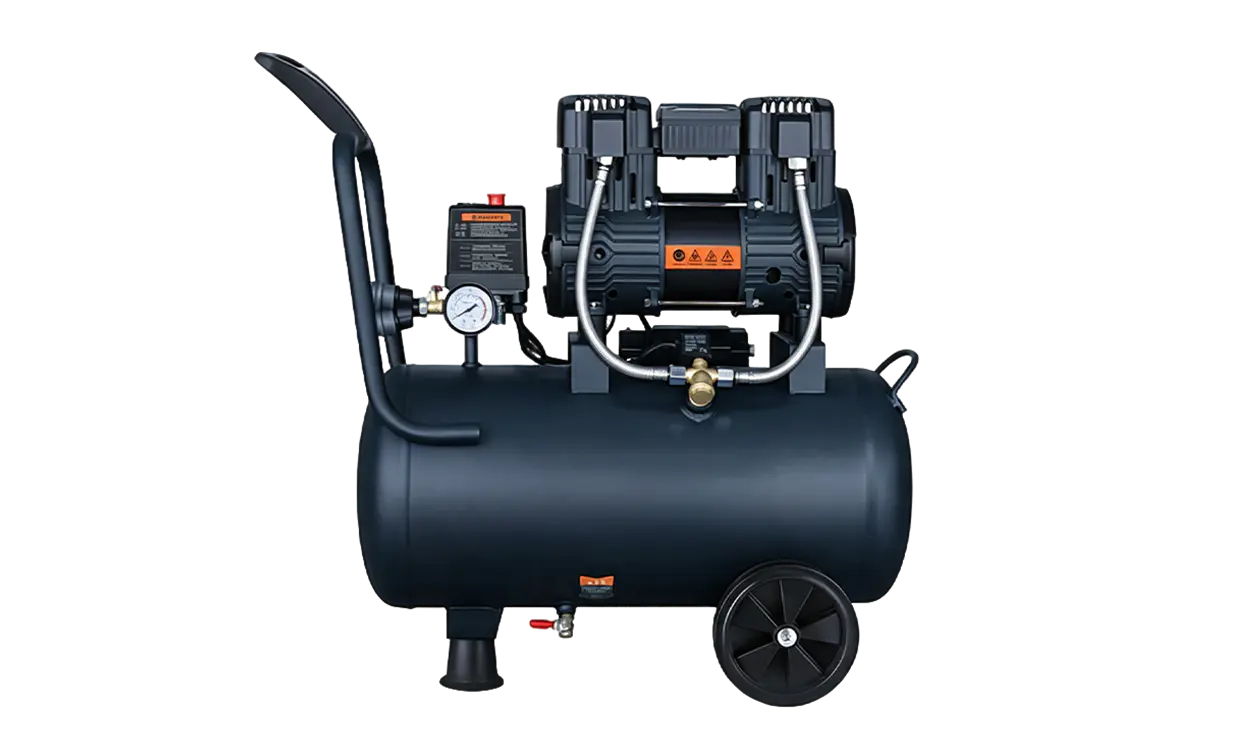
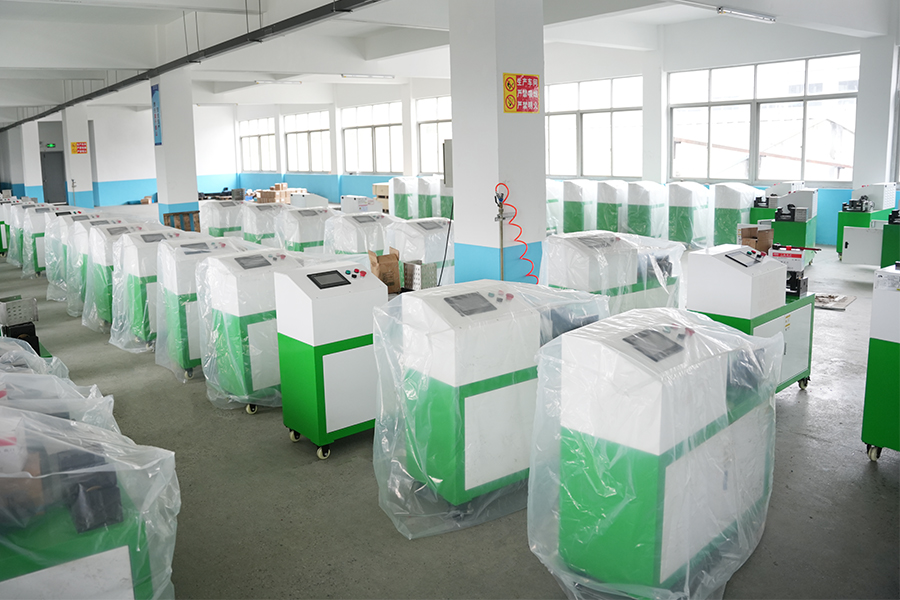
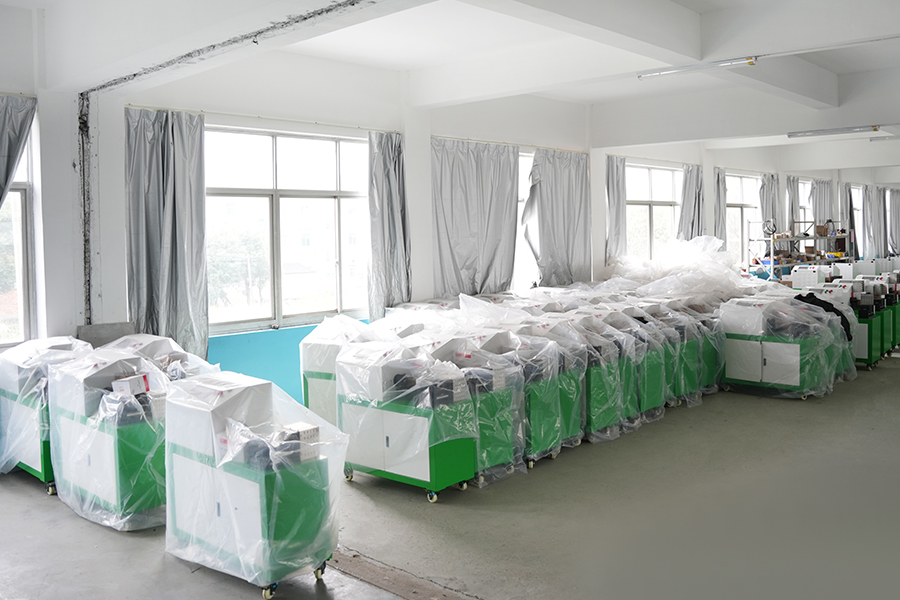
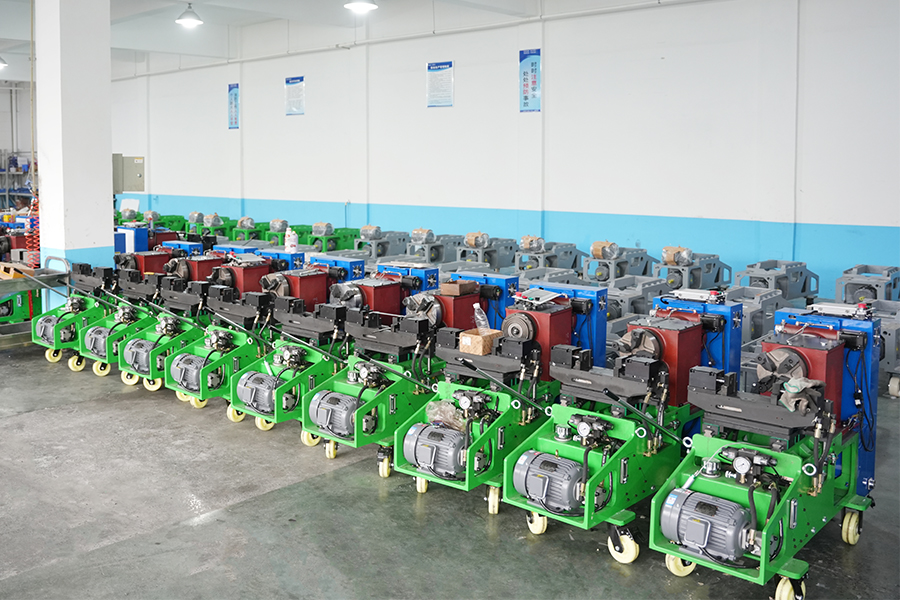
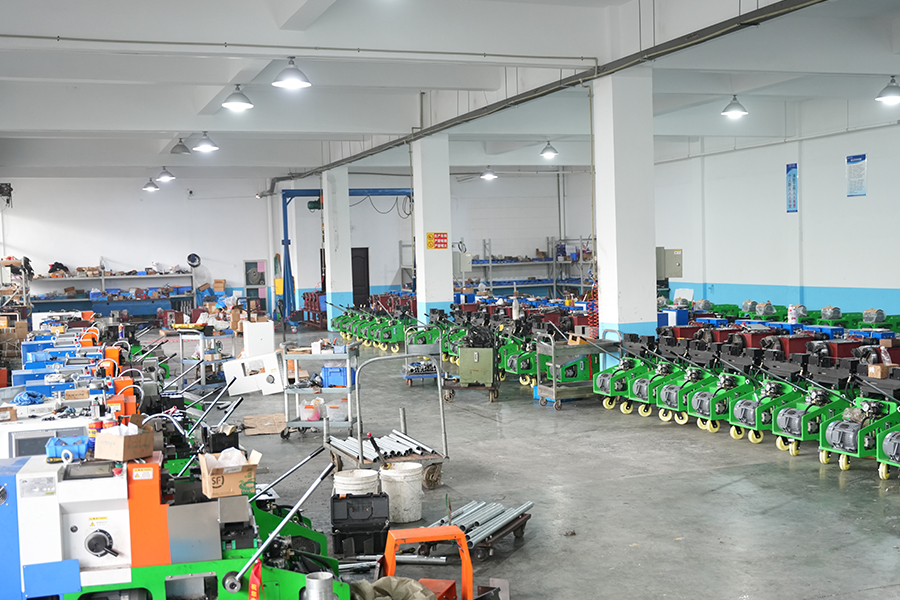
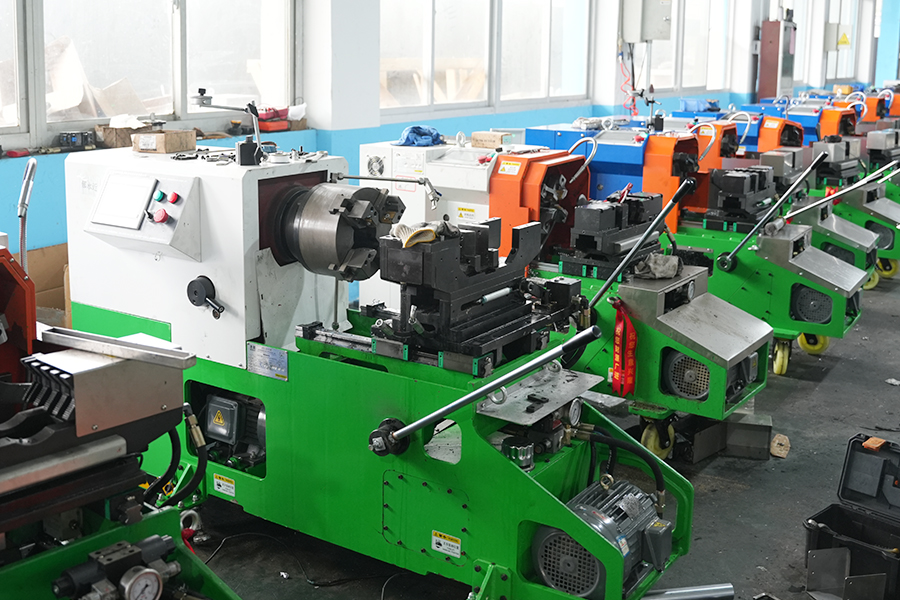
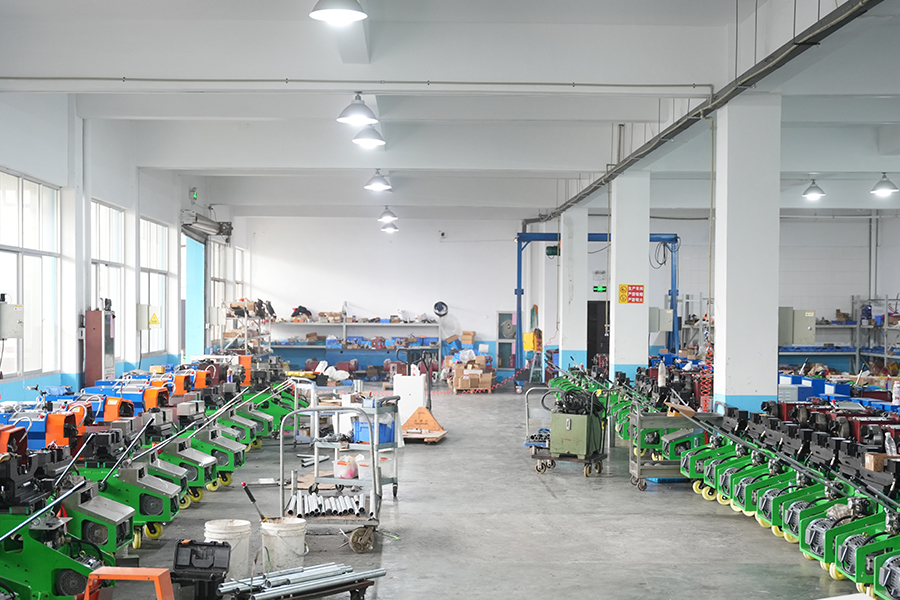
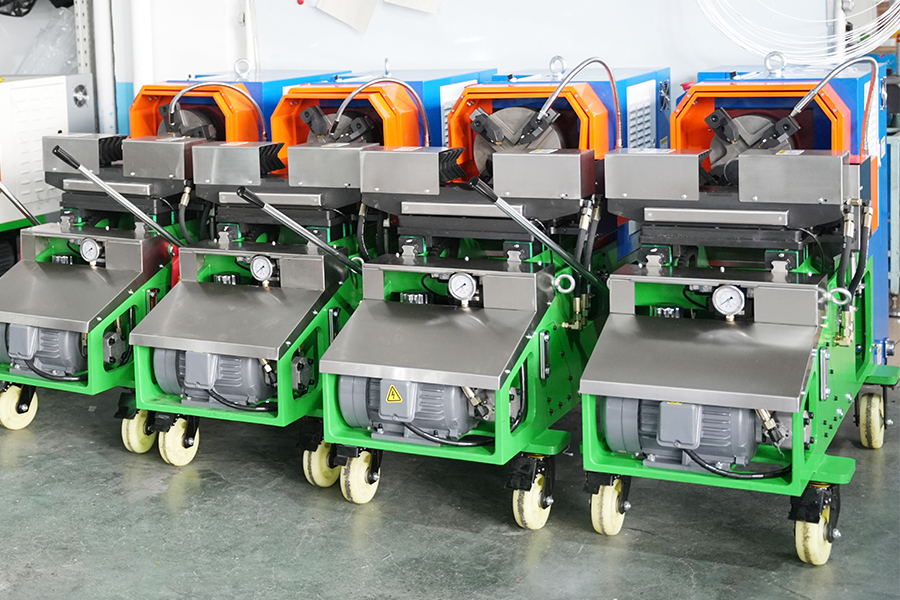
Hangzhou Xinabo Intelligent Electromechanical Technology Co., Ltd builds oil-free piston air compressors as the compressed-air element of our Engineering Construction Pipeline Connection Solutions range. Together with threading machines, pipe tightening machines, cold saws, drilling machines and pressure test pumps, the F1200 and F1680 series deliver clean air to pneumatic tools, test equipment and workshop lines without oil carry-over into the air stream. We manufacture in Hangzhou, China, and configure each unit around the working pressure, air demand and duty cycle of the project.
An Oil-Free Piston Air Compressor manufacturer Built Around Site Conditions
Our engineering background comes from pipeline construction itself. The founder spent more than 20 years on pipe installation sites, and the company has since developed nine generations of intelligent threading machines and holds more than 30 patents, alongside National High-tech Enterprise recognition. The same site logic shapes our compressors: a unit that starts and stops with real demand, holds pressure at the tool, and never puts oil into a thread, a test medium or a finished surface.
As an Oil-Free Piston Air Compressor manufacturer, we supply the compressor, the air treatment and the interface details as one configured package rather than a bare pump and receiver.
Our Air Compressor Range
Two series cover the majority of pipeline, maintenance and light industrial air duties. Both use an oil-free piston design, so the compression chamber runs without lubricating oil and the delivered air carries no oil mist from the compressor itself.
| Series |
Compression and control architecture |
Air supply behaviour |
Typical application fit |
| F1200 Series Air Compressor |
Oil-free piston with a high-efficiency air end and intelligent auto start-stop control |
Shuts down at the preset tank pressure upper limit and restarts quickly at the lower threshold, limiting idle running and internal wear |
Small and medium processing workshops, automotive repair, intermittent pneumatic tool operation, light manufacturing, dental and laboratory air where oil contamination is unacceptable |
| F1680 Series Air Compressor |
Multi-cylinder staged compression, rapid air intake jet technology and an upgraded pressure system |
Shorter compression cycle and higher air supply efficiency, holding continuous high-pressure output under heavier demand |
Mechanical processing, auto parts production, metal smelting, electronic component manufacturing, workshop pneumatic tools and automated production line air supply |
| Project-configured builds |
Receiver size, motor and voltage, outlet arrangement, control interface and air treatment selected to order |
Control behaviour set to the consumption pattern of the site rather than a fixed factory default |
Pipeline fabrication yards, fire protection installation, pressure testing, plant maintenance and mobile service work |
Both series share the same service philosophy: a compact structure, a motor and air end matched to the receiver, and control behaviour that follows how air is actually consumed on site. The wider Pipe Fabrication & Installation Equipment range covers the cutting, threading, tightening and testing stages that these compressors support.
Matching a Series to the Duty Cycle
Intermittent demand and continuous line supply pull the specification in different directions, and the choice between the two series usually follows the pattern of air use rather than the peak figure alone.
- Intermittent tool use: impact wrenches, blow guns, nailers and short pneumatic tasks on a pipe installation site suit the F1200 Series, where auto start-stop keeps the unit off between demands.
- Shift-long or continuous demand: several tools running at once, or air feeding a production line, suits the F1680 Series and its staged multi-cylinder compression.
- Pressure testing and purging: steady pressure with clean, dry air protects test media and instrumentation; the receiver and treatment scope are sized for the volume of the pipe section under test.
- Shared site air: where threading, tightening and testing run from one compressor, we size on simultaneous demand plus a recovery margin rather than the sum of tool ratings.
Configuration Options We Build Into Each Unit
Configuration is settled before production, so the delivered machine matches the circuit, the floor space and the maintenance routine on site.
- Receiver volume and mounting format — receiver-mounted, portable or skid arrangement for yard use.
- Motor rating, voltage, phase and frequency to suit the available supply, with starter and protection matched to the motor.
- Pressure switch setpoints and auto start-stop thresholds aligned to the working pressure at the tool.
- Outlet size, number of take-off points and quick-coupling type for hose or fixed pipework.
- Air treatment package — particulate filtration, coalescing stage, dryer and automatic condensate drain.
- Control interface — local pressure switch, remote start signal or dry contact for line interlock.
- Acoustic treatment and vibration isolation where the unit sits close to occupied work areas.
Air Quality, Filtration and Downstream Treatment
An oil-free piston design removes the compressor as a source of oil aerosol, but it does not remove water or particles. Air purity is normally specified against ISO 8573-1 classes for particles, water and oil, and the treatment train is built to reach the class the process needs.
For general pneumatic tools on a pipeline site, a particulate filter and a receiver drain are usually sufficient. For instrument air, spray finishing, electronics or laboratory use, we add a coalescing stage and a refrigerated or desiccant dryer, and specify the drain arrangement so condensate leaves the system instead of travelling down the line.
Installation, Utilities and Site Integration
The compressor is a package with installation requirements, and those requirements are part of what we confirm with the project team before dispatch.
- Level, load-bearing floor with service clearance on the access side for filter, valve and belt checks.
- Ventilated position with ambient temperature inside the operating range of the unit, away from heat sources and airborne dust.
- Dedicated circuit with correctly rated protection and earthing, sized to the motor rather than to the building supply.
- Distribution pipe or hose sized to keep pressure drop low between receiver and tool.
- Condensate routed to a collection point, with the drain checked as part of commissioning.
Quality Control, Documentation and Acceptance
Raw material sources are screened before release to production, and each unit is assembled to the configuration recorded on the order. Before packing, the machine is checked against that configuration — pressure behaviour, control response, electrical connections and leak tightness of the air circuit — and the results form part of the delivery documentation.
Conformity documentation covering the Machinery Directive and the Electromagnetic Compatibility Directive is held for the relevant equipment, and the document set travels with the shipment together with the operating manual and the configured specification sheet. Where a project requires a witnessed run or a specific acceptance record, we agree the test points and the record format in advance.
Maintenance, Spare Parts and Serviceability
Oil-free operation removes oil changes and oil disposal from the maintenance schedule, which is one of the main reasons these units are chosen for site work. What remains is a short, predictable routine.
- Intake filter inspection and replacement according to dust conditions on site.
- Condensate drain check and receiver inspection at fixed intervals.
- Valve, piston ring and bearing inspection at the intervals set in the manual, with wear parts available as spares.
- Pressure switch and safety valve verification, plus belt tension and alignment on belt-driven variants.
- Spare parts support covering filters, valves, seals, pressure switches and drain components, with technical guidance from our team on replacement intervals.
Information We Use to Configure Your Solution
A proposal is only as good as the working point behind it. These are the inputs that change the machine, the treatment scope and the control interface.
| Project input |
Why it shapes the configuration |
What we return |
| Working pressure at the tool (bar / psi) |
Sets the cut-out pressure and the pressure system of the compressor |
Series recommendation and pressure switch setting |
| Air demand (L/min or CFM) and number of simultaneous tools |
Determines displacement, receiver volume and recovery time |
Unit sizing and receiver recommendation |
| Duty cycle — intermittent, shift-long or continuous |
Decides whether auto start-stop or staged continuous compression fits better |
Series selection and control behaviour |
| Power supply — voltage, phase, frequency, available circuit |
Fixes motor, starter and protection arrangement |
Electrical specification and connection data |
| Air quality requirement (particles, water, oil) |
Determines filtration, drying and drain arrangement downstream |
Air treatment scope and filter selection |
| Installation environment — ambient temperature, ventilation, floor space, noise limits |
Affects siting, cooling and acoustic treatment |
Layout guidance and clearance requirements |
| Interface and control — local switch, remote signal, line interlock |
Determines how the compressor reports and responds to the plant |
Control interface definition |
| Destination, documentation and packaging |
Drives crating, manual language and shipping marks |
Packing scope and document set |
Frequently Asked Questions
What does oil-free mean on a piston compressor?
The compression chamber runs without lubricating oil, so the air leaving the compressor carries no oil mist from the machine itself. Lubrication is confined to parts that do not contact the air stream, and self-lubricating materials are used at the piston and guide surfaces. This removes oil changes and oil carry-over from the air supply, which matters for pneumatic tools, test media and any process where oil residue is a defect.
Which series suits intermittent tool use, and which suits continuous line supply?
The F1200 Series is built for intermittent and short-term continuous demand, with auto start-stop that shuts the unit down at the preset upper pressure limit and restarts it when pressure falls. The F1680 Series uses multi-cylinder staged compression and rapid air intake jet technology for continuous high-pressure output, which suits production lines and workshops running several tools at once.
Can one compressor serve threading, tightening and pressure testing on the same site?
Yes, provided the unit is sized on simultaneous demand plus a recovery margin rather than on a single tool rating. We size the receiver and the treatment train so that pressure at the furthest take-off point stays within the working range of the tool. Where testing requires particularly dry air, a dryer and coalescing stage are added to the package.
What air treatment is needed after the compressor?
At minimum, a particulate filter and a working condensate drain. For instrument air, spraying, electronics or laboratory use, we add a coalescing filter and a refrigerated or desiccant dryer to reach the required ISO 8573-1 class. The treatment scope is agreed with the order so that the receiver, filters and drain are matched to each other.
What information do you need to prepare a configuration and quotation?
Working pressure at the tool, air demand and the number of simultaneous tools, duty cycle, available power supply, required air quality, installation environment, control interface, and the destination with its documentation and packaging requirements. With those inputs we return a series recommendation, receiver and treatment scope, electrical data and a layout for the installation.
How is the unit maintained, and are spare parts available?
Maintenance covers intake filter inspection, condensate drain checks, valve and piston ring inspection at the intervals in the manual, and verification of the pressure switch and safety valve. Because the compression chamber is oil-free, there is no oil change schedule. Spare parts including filters, valves, seals, pressure switches and drain components are supplied from our factory, with technical guidance on replacement intervals.

 English
 Español
 عربى