
 English
 Español
 عربى
عربى


F1680 Series Air Compressor
The F1680 Series Air Compressor is engineered for stable and efficient air supply, featuring core technologies of multi-cylinder compression, rapid ai...
See Details
Content
Picture a fire protection crew hanging 300 feet of sprinkler main from a concrete soffit. Every hanger needs an anchor hole drilled overhead, and a corded rotary hammer tied to a generator or a 100-foot drop cord turns simple drilling into a logistics exercise. Swap in a 21V lithium-ion brushless rotary hammer and the same crew works continuously: one operator on the tool, one battery pack on charge, no cord anywhere on the critical path.
The short version: for concrete holes up to about one inch in diameter and for light chipping, a lithium-ion brushless rotary hammer is no longer a compromise against corded tools; it is the practical default for most mechanical, electrical, and general construction work. Lithium-ion chemistry solved the problem of delivering sustained high current from a pack a person can carry, and brushless motor design solved the problem of wasting that energy as heat inside the tool. This guide explains what those changes mean on real jobsites, which specifications deserve attention, and what to check before you buy.
A brushed motor relies on carbon brushes that slide against a spinning commutator to deliver current. That physical contact creates friction, heat, and constant wear: brushes are a scheduled replacement part, and the tool gradually loses power as they wear down. A brushless motor removes the contact entirely. The windings stay fixed, a small electronic controller switches current between them in sequence, and permanent magnets on the rotor follow along.
Three practical consequences follow. Efficiency improves because no energy is lost to brush friction, with gains commonly cited at 25 to 40 percent over brushed equivalents. Service life extends because there are no brushes to replace and the motor runs cooler. Control improves as well, since the controller enables a soft start, trigger-based speed adjustment, and protection that cuts power before a stall overheats the motor or the battery.
One clarification matters for rotary hammers specifically. The motor never strikes the bit directly. It drives an electro-pneumatic mechanism in which a piston compresses an air cushion that drives the bit forward. Brushless design therefore improves the delivery system, meaning runtime, control, and durability, while a separate specification called impact energy defines how hard the tool actually hits in concrete.
Voltage is the most visible number on the label and the least useful for comparing drilling ability. A 21V rating describes the battery platform, not the work rate. When you compare models, start with these numbers instead.
Impact energy, measured in joules, tells you how hard each blow strikes the bit. For 21V-class SDS-Plus tools it typically falls between 1.5 and 3.2 joules, and that spread explains why two nominally identical 21V hammers can drill the same 12 mm hole at noticeably different speeds. Blow rate, measured in blows per minute, is the other half of the equation, because drilling speed reflects how often that energy is delivered.
The SDS-Plus chuck, standard in this class, accepts bits whose shanks slide into three open grooves, so the bit moves axially with the hammer action and changes without tools. It comfortably covers hole diameters up to about 26 mm (1 inch) in concrete. Larger doweling and core work belong to the heavier SDS-Max class.
| Specification | Why it matters | Typical 21V-class range |
|---|---|---|
| Impact energy | Defines striking force, the main driver of concrete drilling speed | Approx. 1.5-3.2 J |
| Blow rate | How often the energy reaches the bit | Approx. 4,000-5,500 bpm |
| Chuck system | Sets bit compatibility and the maximum practical hole size | SDS-Plus |
| Max concrete capacity | Largest anchor hole the tool sustains in daily use | Up to approx. 26 mm |
| Weight with battery | Drives fatigue during overhead and ladder work | Approx. 3-4.5 kg |
Amp-hours (Ah) are the fuel tank. A 4.0 Ah pack stores twice the energy of a 2.0 Ah pack on the same 21V platform, and lithium-ion cells hold voltage nearly flat until the pack is almost empty, so the tool does not fade the way older cordless designs did. Brushless electronics extend the advantage by drawing current more efficiently under load, which is why the same pack yields more holes behind a brushless motor than a brushed one.
For a day dominated by anchor drilling, plan on at least two packs per tool and keep one on the charger at all times. If the work is sustained, slab after slab of hanger anchors, higher-capacity packs or a backpack battery system change the economics of the job, because a crew member stops walking to the charger. The trade-offs between capacity, weight, recharge time, and long-term battery health are laid out in detail in this backpack battery pack buying guide covering 20Ah and 30Ah 21V packs.
Check one more thing before committing: what else runs on the same packs. A hammer that shares batteries with your grinders, wrenches, and saws multiplies the value of every pack you own and simplifies the charging shelf on the truck.
Mechanical and fire protection contractors meet the rotary hammer early in nearly every job, long before any pipe gets threaded. The recurring tasks look like this:
Three operating modes are what let one tool cover all of it. Rotation-only turns it into a conventional drill for steel and wood; hammer-plus-rotation drives SDS-Plus bits into concrete; hammer-only stops rotation for chisel work. A well-damped grip and a weight near 4 kg keep the most repetitive task in sprinkler work, overhead hanger drilling, sustainable across a full shift. A 3-mode model in the 21V brushless line is exactly this kind of do-everything unit for a mechanical crew.
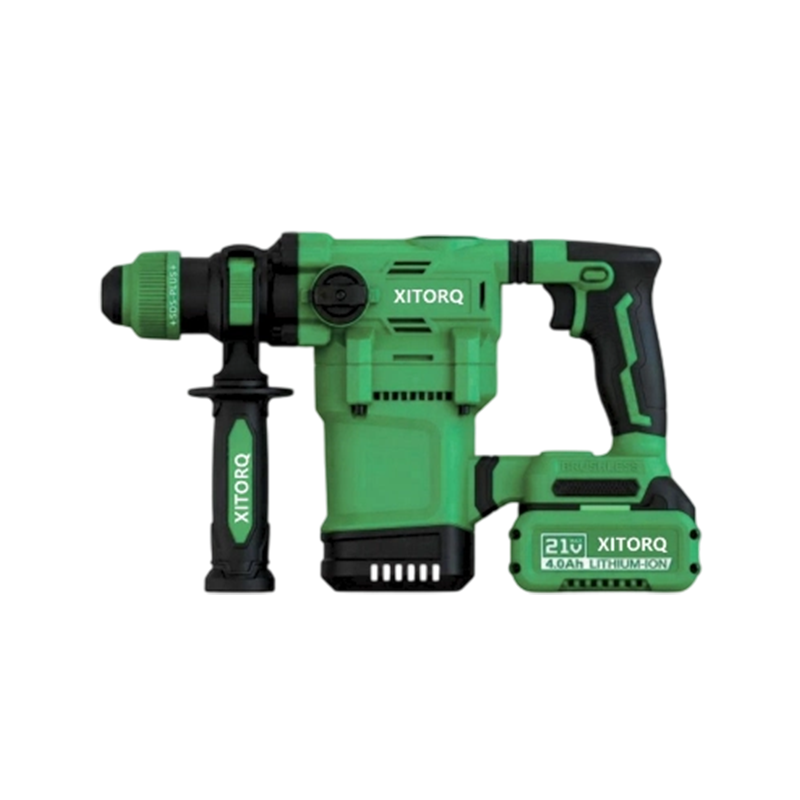 21V Brushless 3-Mode Rotary Hammer with 4.5J Impact EnergyThis 3-mode brushless rotary hammer drills, chisels, and hammers with SDS-Plus bits, covering the full range of sprinkler and mechanical work. Around 4 kg with vibration damping, it suits overhead hanger drilling across a full shift.View Product →
The honest way to choose is to estimate hole count per day. If the tool mostly makes 6 to 10 mm holes for light anchors and brackets, a few dozen holes on an average day, a standard-weight model is the right class. At this tier, balance and control matter more than maximum impact energy, because fatigue, not power, is what slows a crew down. A compact high-magnetic brushless model with a full SDS-Plus chuck, such as the XJ-709 in the 21V range, fits this profile.
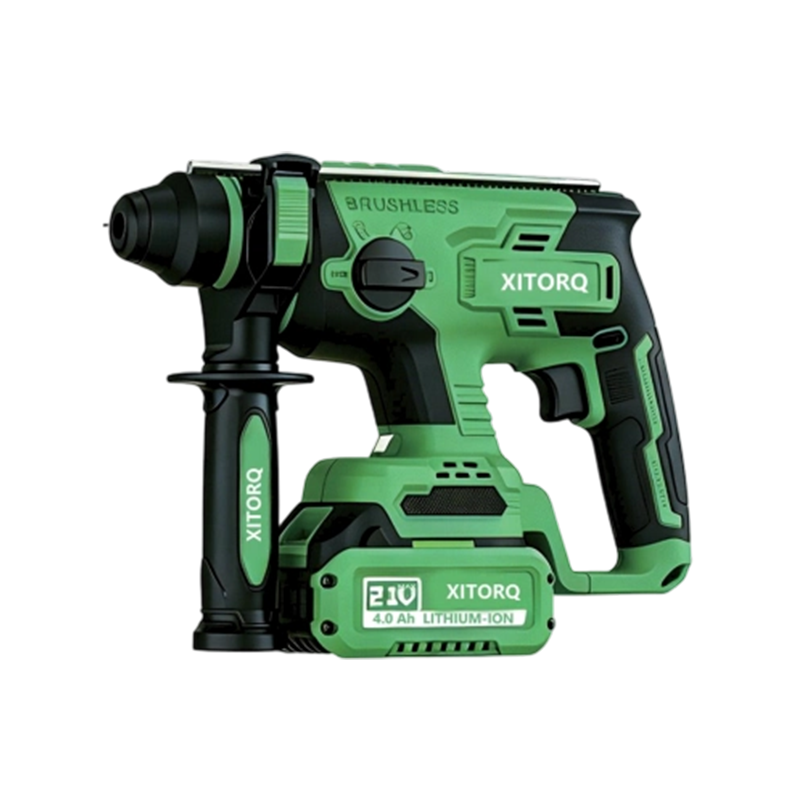 XJ.709 21V High-Magnetic Brushless Rotary Hammer, 1.7J with SDS-Plus ChuckA compact standard-weight option for crews making 6 to 10 mm anchor holes a few dozen times a day. Its high-magnetic brushless motor, three modes, and quick-change SDS-Plus chuck prioritize balance and low fatigue over raw impact energy.View Product →
Crews that drill all day, every day, with repeated 12 to 16 mm anchor holes, regular chipping, and sustained overhead work, should move up a tier. A heavy-duty model trades some weight for higher impact energy and reinforced internals, which shortens per-hole time and holds up across the duty cycle. The XJ-728 occupies that slot in the same 21V platform, so packs stay interchangeable between a light and a heavy tool on the same truck.
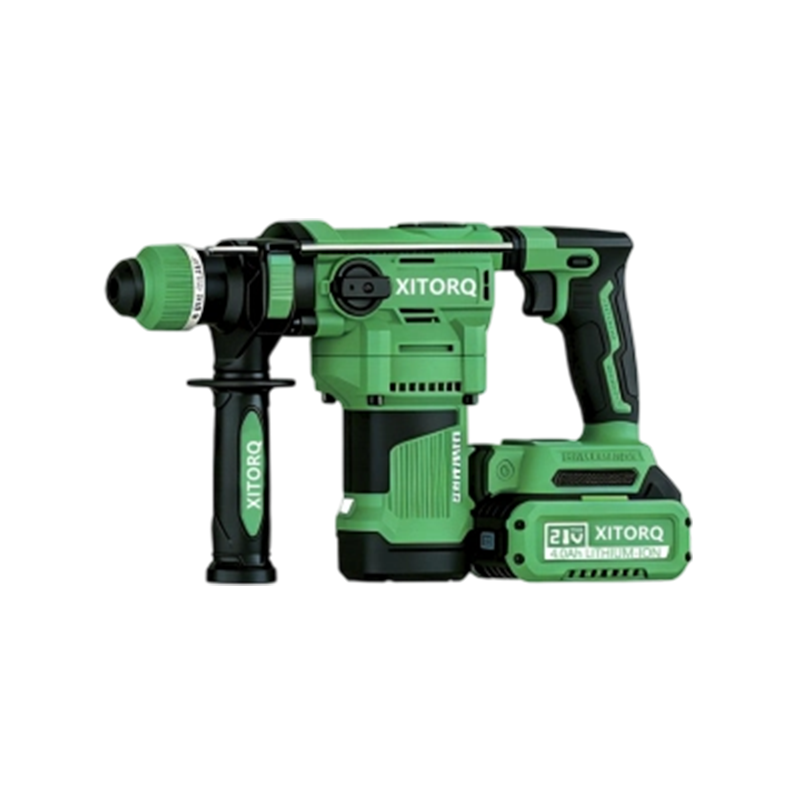 XJ.728 21V Heavy-Duty Rotary Hammer with 2.8J Impact EnergyFor all-day drilling of repeated 12 to 16 mm anchor holes with regular chipping, this heavy-duty model delivers 2.8 J impact energy and reinforced internals. It shares the 21V platform, so battery packs stay interchangeable between tools.View Product →
Run through this list before you commit to a model or a platform:
The decision comes down to three questions. Does the impact energy cover your largest routine hole? Does your battery plan survive a full shift of drilling? Do the three modes map to the work you actually perform? If all three answers are yes, the tool pays for itself quickly, not because it equals a corded machine on paper, but because it removes the cord from the critical path of the job.
It is also worth looking past the hammer itself. Suppliers that build their name on pipe fabrication equipment for fire protection and construction crews, from threading machines to cold saws, increasingly carry a complete 21V brushless cordless line alongside the shop equipment. Standardizing on one battery family, from the pipe machine on the cart to the rotary hammer on the scaffold, saves more across a fleet than any discount on a single tool.
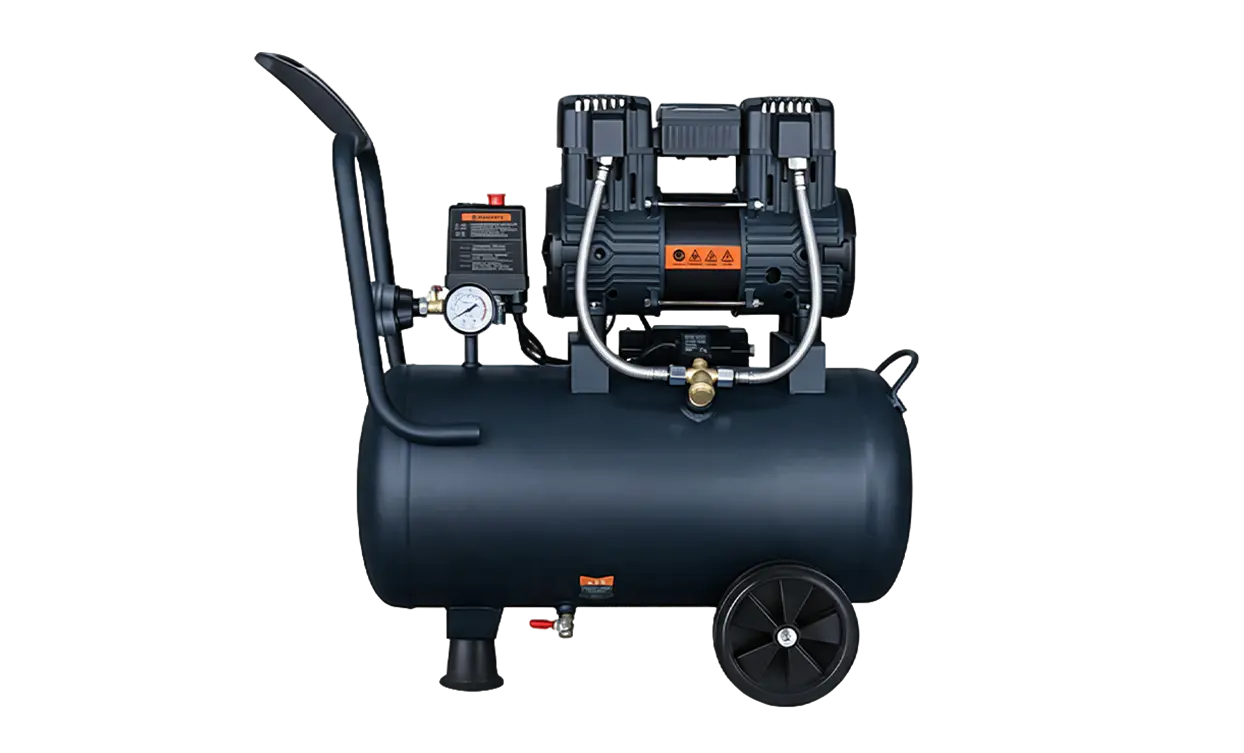
The F1680 Series Air Compressor is engineered for stable and efficient air supply, featuring core technologies of multi-cylinder compression, rapid ai...
See Details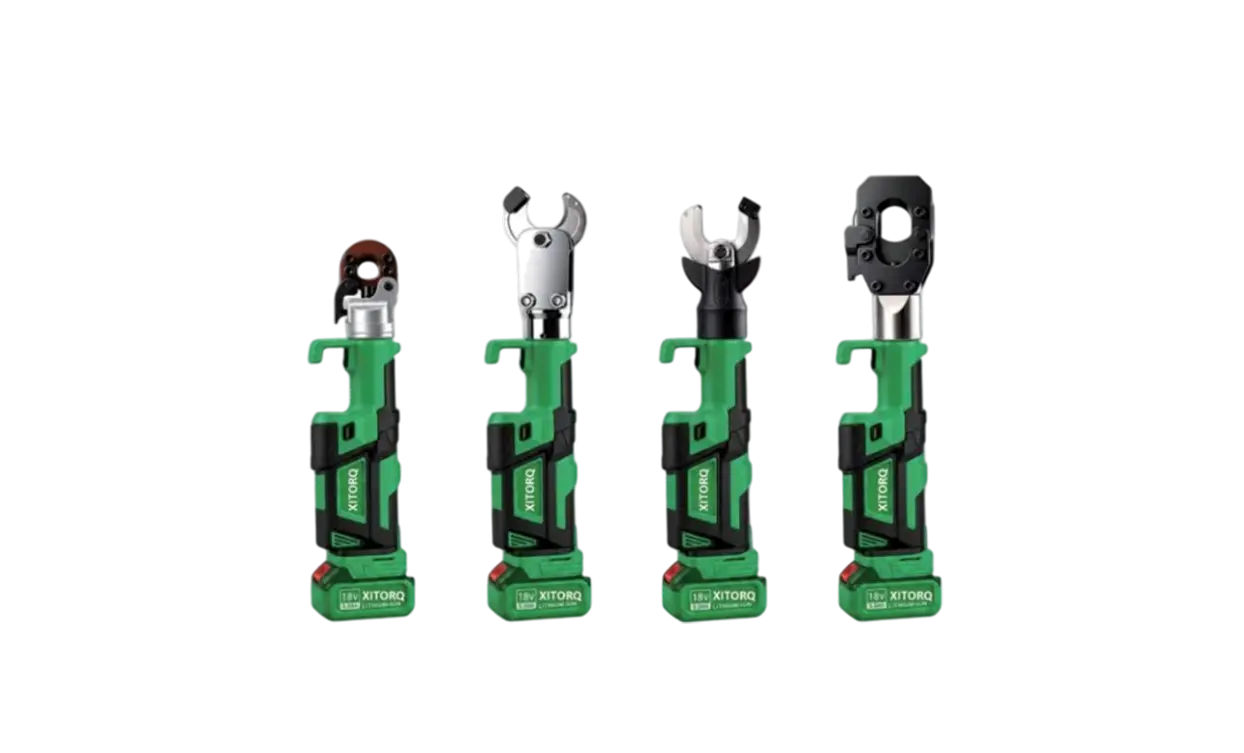
This 18V lithium-ion industrial cable cutter is a professional tool designed for large-diameter cable cutting. It features a brushless lithium-ion pow...
See Details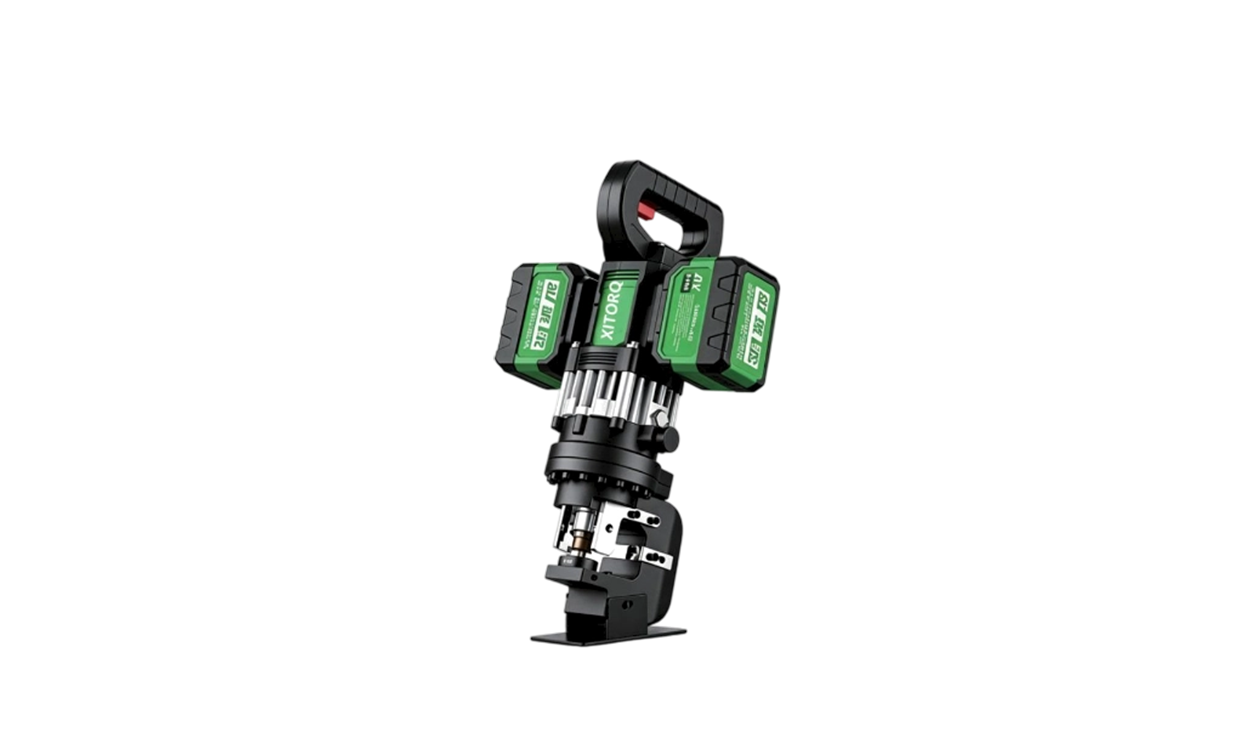
This 21V lithium-ion channel steel hole puncher is a portable hydraulic punching tool designed for punching holes in channel steel, angle steel, steel...
See Details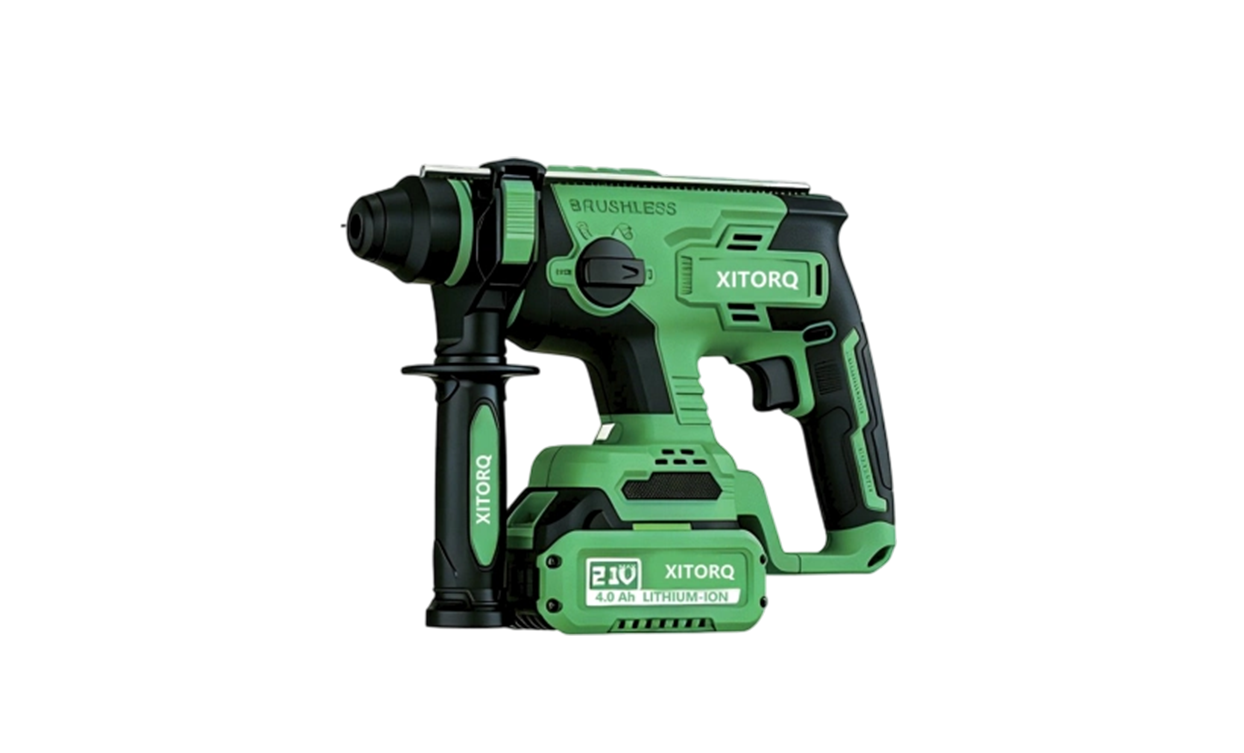
The XJ.709 21V lithium-ion high-magnetic brushless rotary hammer is an industrial-grade hammer from the Xiaojia brand. Equipped with a high-magnetic b...
See Details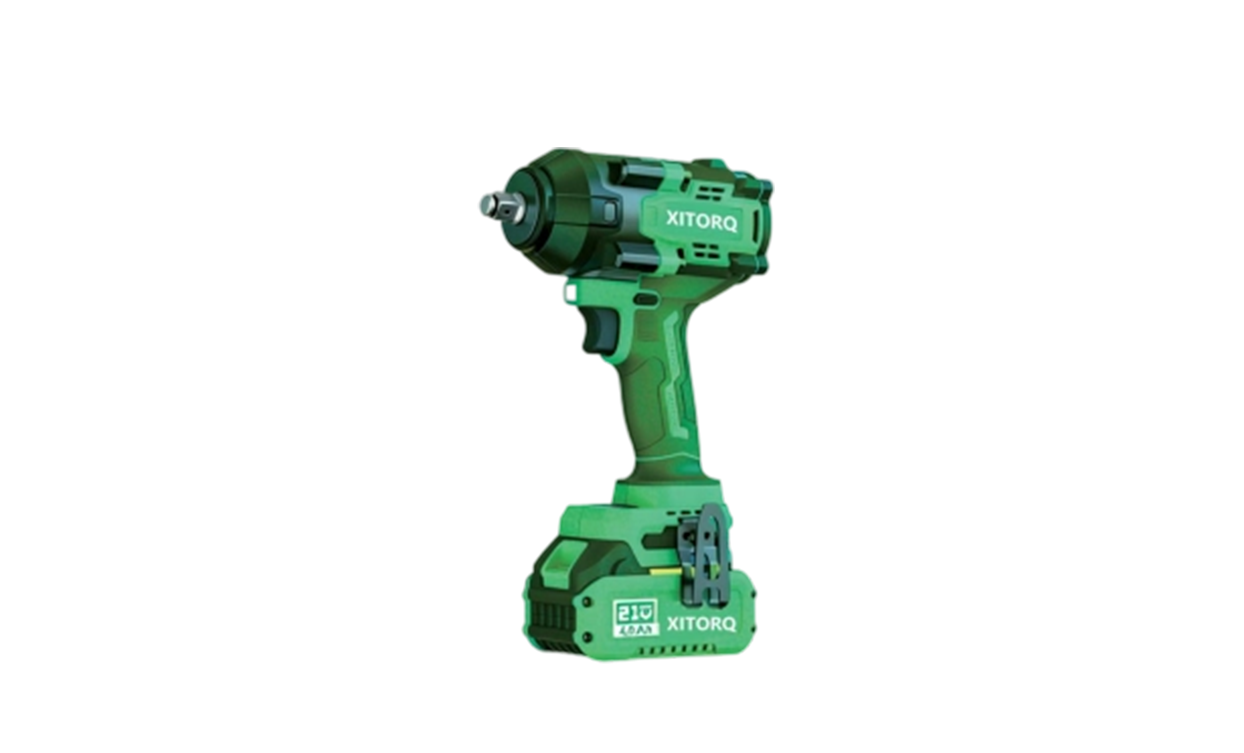
The XJ.570 21V lithium-ion brushless impact wrench is a light industrial-grade tool from the Xiaojia brand. Equipped with a 5220 brushless motor and p...
See Details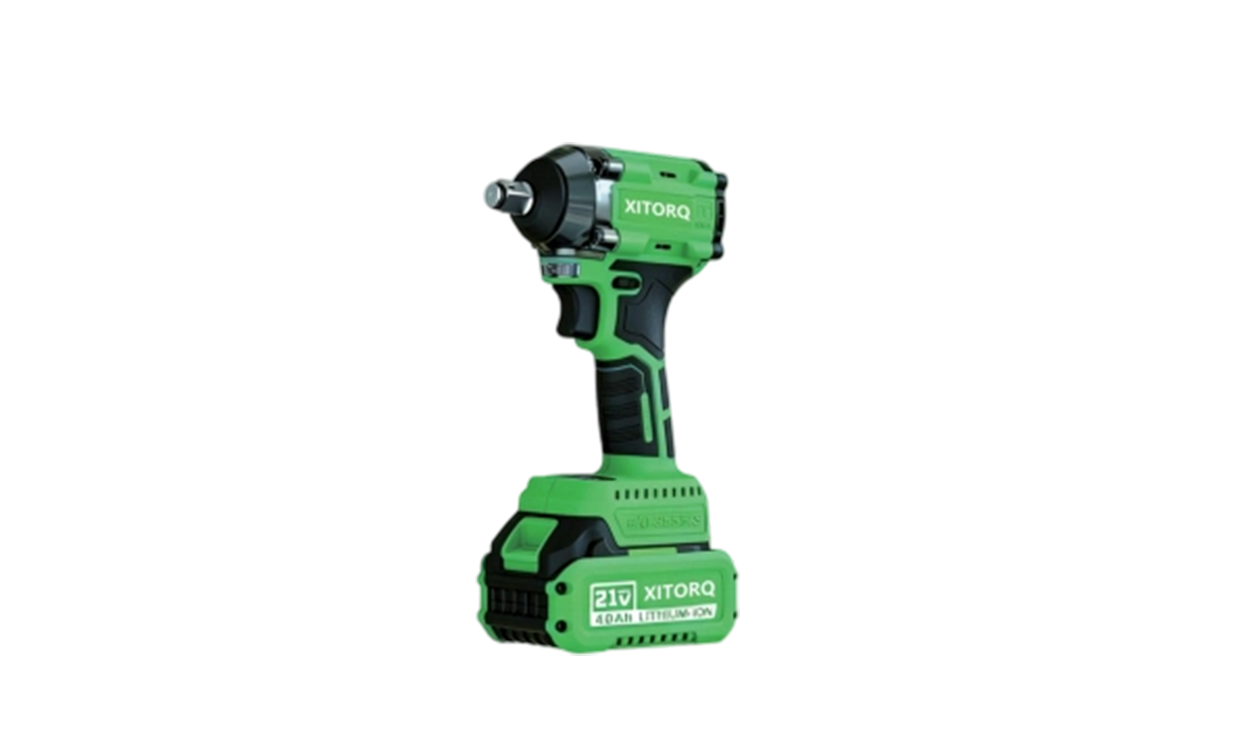
The XJ.523 21V lithium-ion brushless impact wrench is a heavy-duty industrial-grade tool from the Xiaojia brand. Powered by a high-power brushless mot...
See Details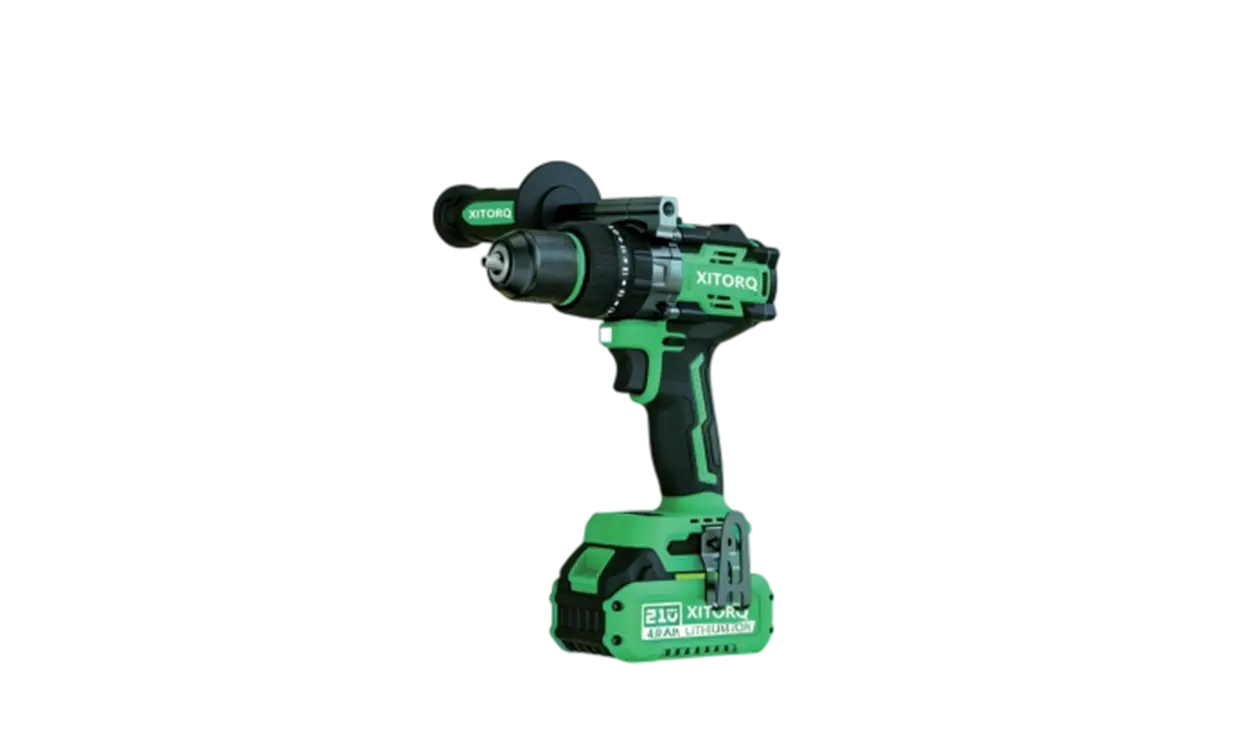
The XJ.615 21V lithium-ion brushless hammer drill/driver is a dual-purpose cordless drill from the Xiaojia brand. Powered by a 21V battery pack for co...
See Details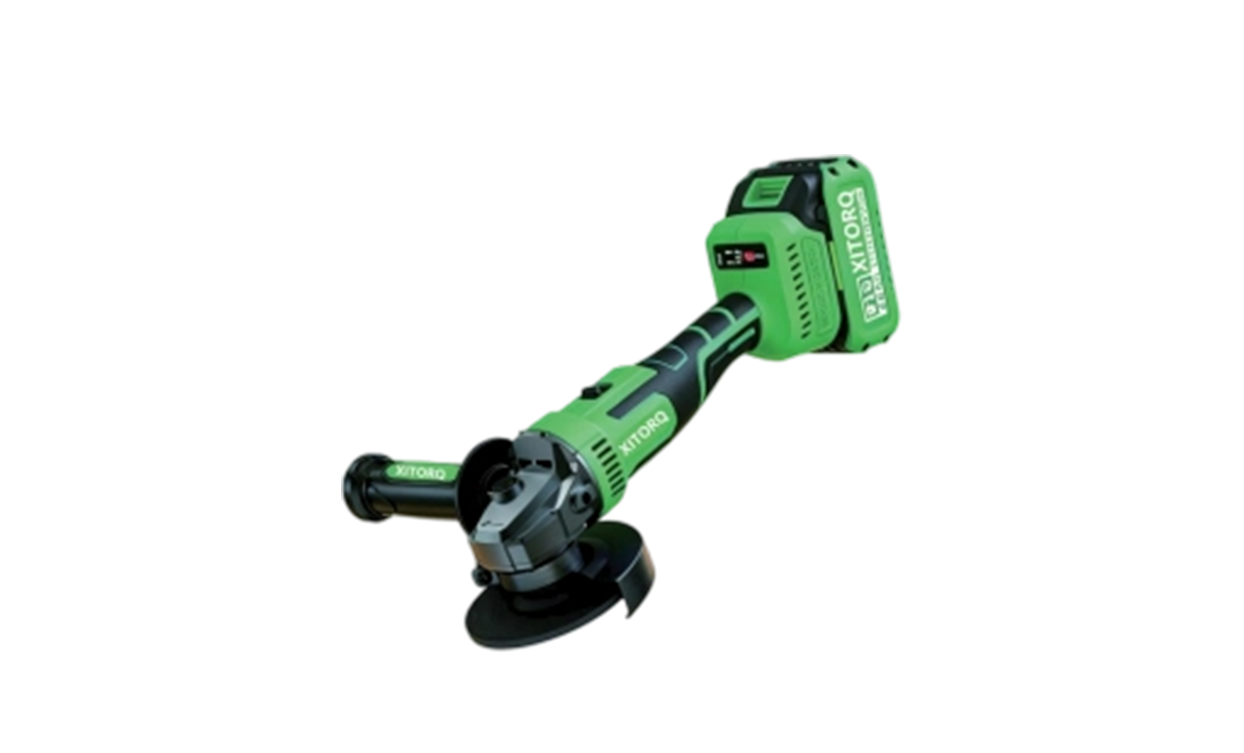
The XJ.908 21V lithium-ion high-magnetic brushless angle grinder is an industrial-grade grinder from the Xiaojia brand. Featuring a high-magnetic brus...
See Details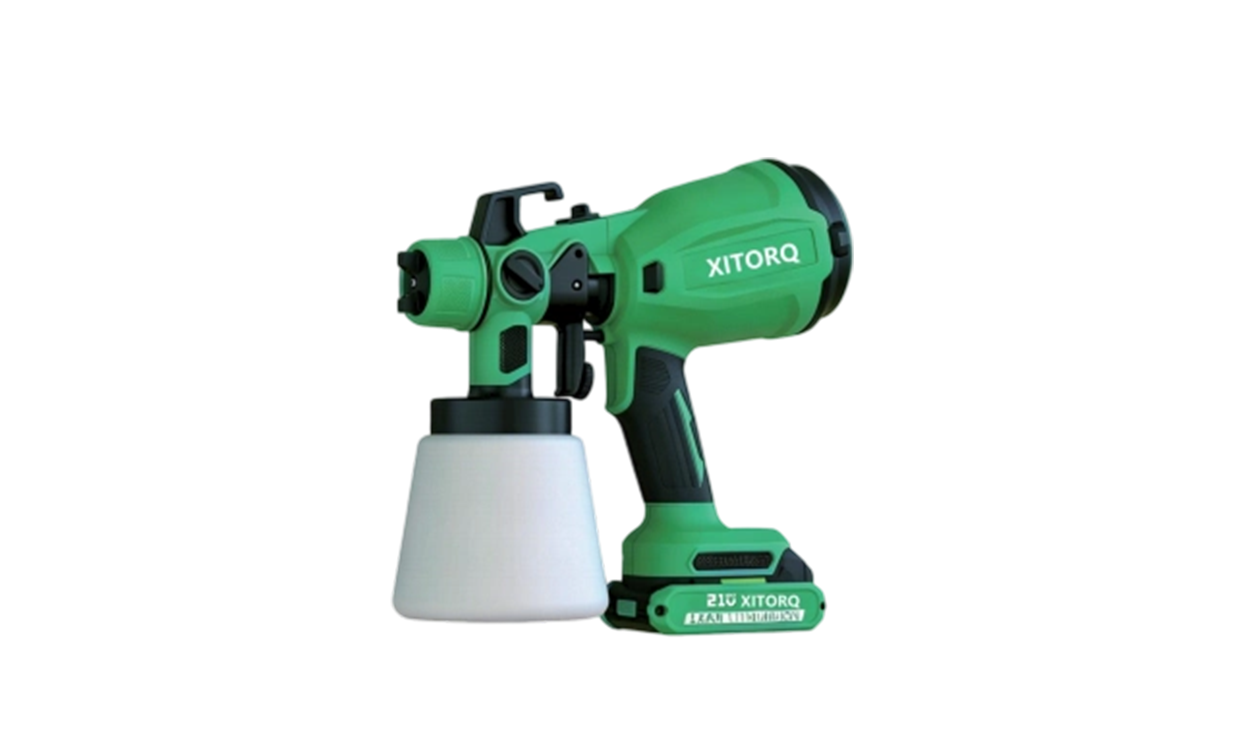
The 21V lithium-ion spray gun MT is an industrial-grade cordless spray gun from the Xiaojia brand. Featuring an upgraded brushless motor with enhanced...
See Details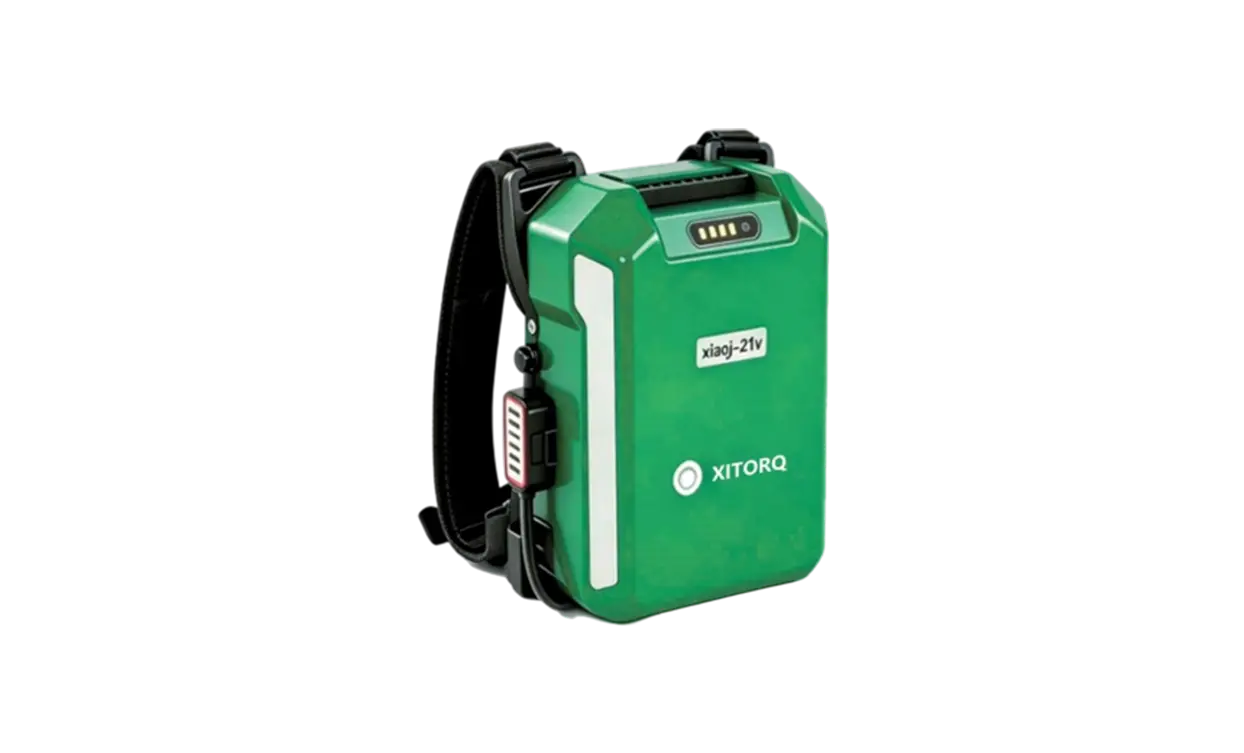
This backpack lithium battery pack is a large-capacity portable power supply designed for extended continuous operation of power tools. Using high-rat...
See Details
Copyright © by Hangzhou Xinabo Intelligent Electromechanical Technology Co., Ltd Rights Reserved. Pipe Threaders Manufacturers
